IT by Stephen King: Childhood Trauma, Fear, and the Shape of Evil
The Return of What We Fear Most
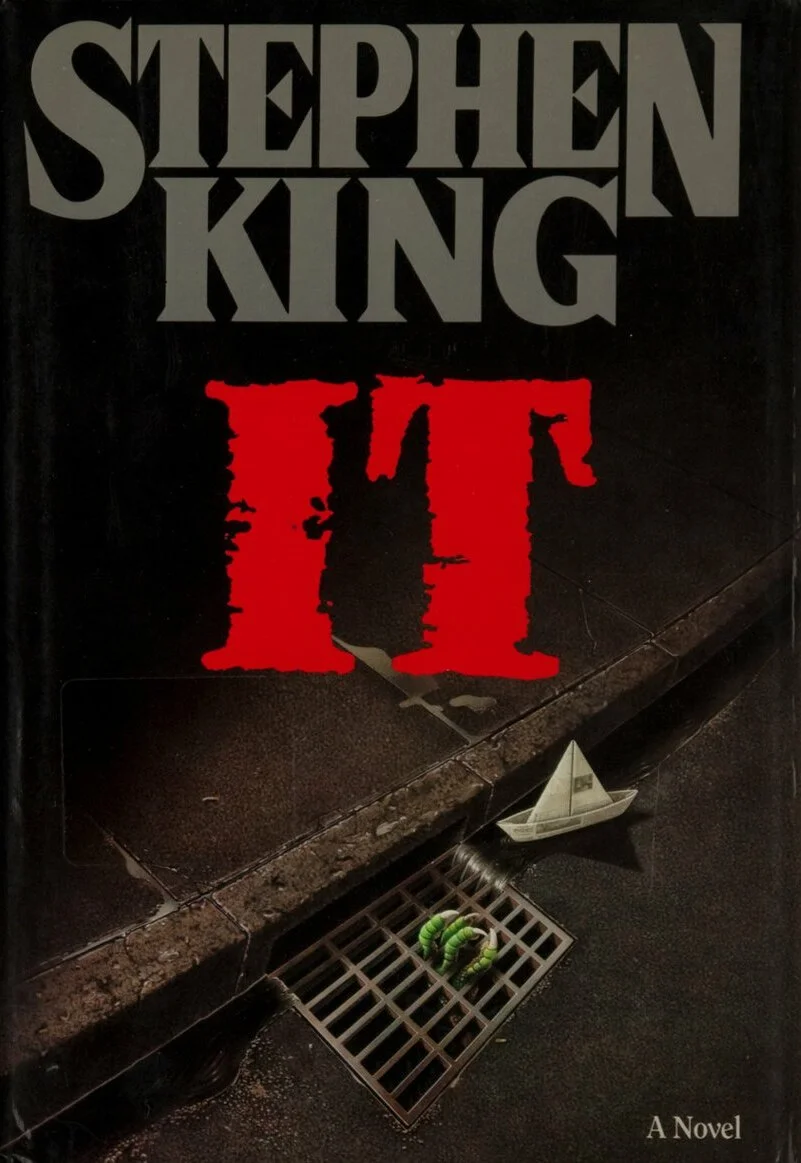
Few novels burrow as deeply into the psychological underworld of childhood as IT, the 1986 epic by Stephen King. On its surface, IT is a horror story: a shape-shifting entity terrorizes the small town of Derry, Maine, preying on children and manifesting most famously as the grotesque clown Pennywise. But beneath this surface lies something far more unsettling and enduring. IT is not merely about monsters; it is about the way fear is born, how it is sustained, and how it mutates within the fragile, formative space of childhood.
At its core, the novel is an excavation of trauma. King presents childhood not as an innocent idyll, but as a contested psychological terrain where imagination, vulnerability, and cruelty coexist. The true horror of IT lies not only in the supernatural entity that stalks Derry, but in the human capacity for violence, neglect, and denial. The monster, in this sense, becomes a mirror, reflecting the buried fears and wounds that define both individuals and communities.
This essay explores IT as a profound meditation on childhood trauma and fear, examining how King constructs horror not as an external invasion, but as something intimately tied to memory, identity, and the lingering scars of youth.
Derry: A Town Built on Denial
Derry is not simply a setting; it is a psychological ecosystem. King constructs the town as a place where violence is cyclical and repression is communal. Throughout the novel, acts of brutality, racist attacks, domestic abuse, and unexplained disappearances occur with disturbing regularity. Yet these events are consistently forgotten, minimised, or rationalised by the adult population.
This collective amnesia is crucial. It suggests that trauma is not only an individual experience but a social one. Derry itself participates in a kind of psychological repression, a refusal to confront the darkness at its core. The entity known as IT thrives in this environment, feeding not only on fear but on the town’s willful blindness.
The implication is unsettling: the monster is not an anomaly but a symptom. IT exists because Derry allows it to exist. The town’s denial creates the conditions for horror to flourish, turning it into a breeding ground for both supernatural and human cruelty.
Pennywise: The Shape of Fear
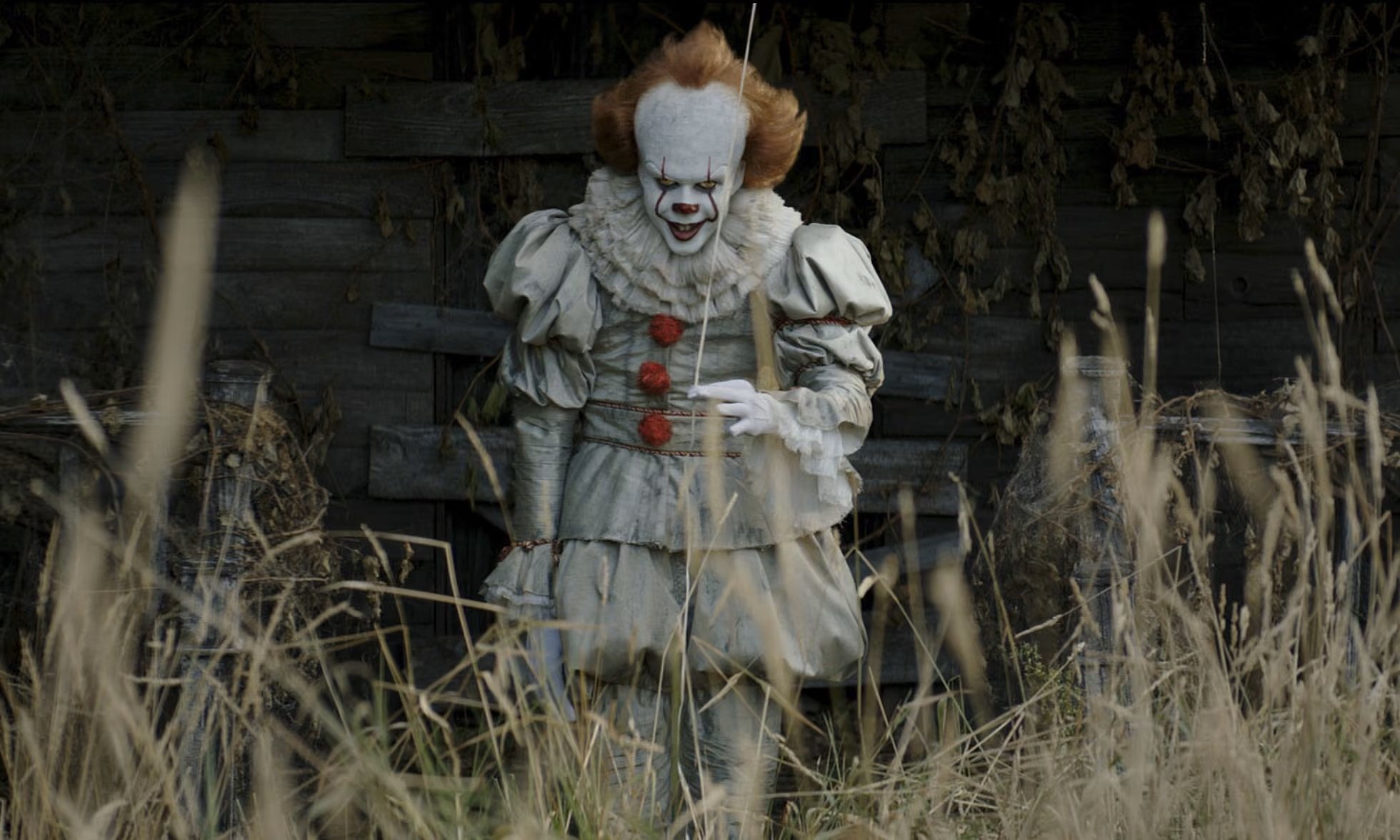
Pennywise, or IT, is one of the most iconic monsters in modern literature, but its true power lies in its fluidity.
IT does not have a fixed form; it becomes whatever its victims fear most. For one child, it appears as a werewolf; for another, as a leper; for Beverly Marsh, it manifests through a grotesque eruption of blood from a sink an image laden with implications of puberty and bodily horror.
This shapeshifting nature transforms IT into something more than a creature. It becomes a mechanism, a personification of fear itself. Each child’s encounter with IT is deeply personal, rooted in their individual anxieties and traumas. In this way, King suggests that fear is not universal but subjective, shaped by experience and vulnerability.
The most profound form of IT, however, is the “deadlights,” an incomprehensible cosmic force that represents the limits of human understanding. Here, fear transcends the personal and enters the existential. The children are not only confronting their own nightmares but brushing against something vast and indifferent, a reminder of their own fragility in an unknowable universe.
Childhood as a Site of Trauma
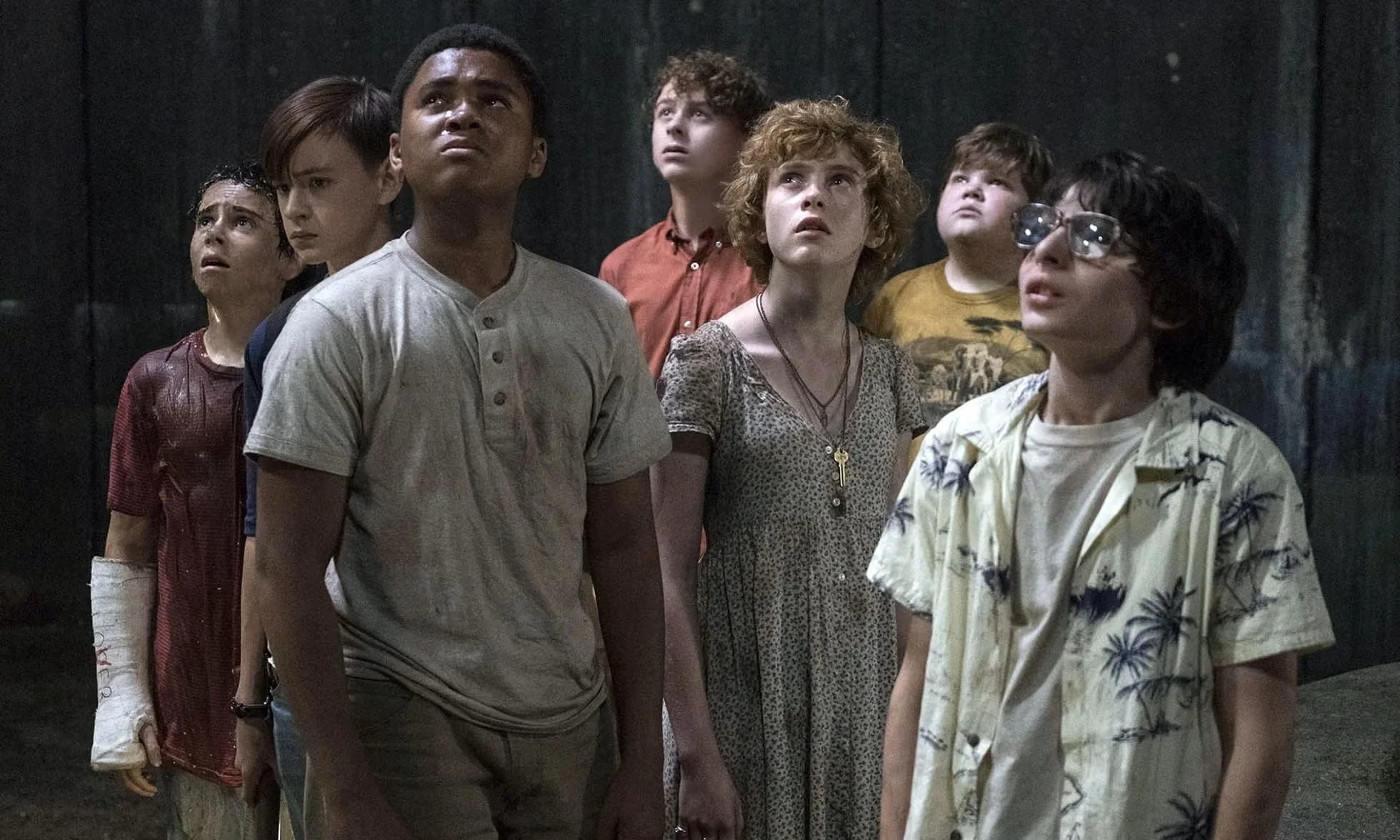
The Losers’ Club the group of children at the heart of the novel are united not by chance but by shared vulnerability. Each member carries a distinct trauma:
Bill Denbrough is haunted by the death of his younger brother, Georgie, a loss compounded by guilt and obsession. Beverly Marsh endures physical and sexual abuse at the hands of her father. Ben Hanscom is isolated and bullied, his loneliness shaping his inner world. Eddie Kaspbrak is suffocated by a hypochondriac mother who weaponises illness as control. Richie Tozier uses humour as a defence mechanism, masking insecurity. Mike Hanlon faces systemic racism and historical violence. Stan Uris struggles with a need for order in a world that defies rationality.
These experiences are not incidental; they are the very conditions that make the children susceptible to IT. Trauma opens a door. It fractures the sense of safety that childhood is supposed to provide, leaving the children exposed to forces both internal and external.
Yet King does not present trauma solely as a source of weakness. It also becomes a point of connection. The Losers’ Club forms a bond that is both emotional and existential, a shared recognition of pain that allows them to confront IT together. In this sense, trauma is double-edged: it isolates, but it also creates the possibility of solidarity.
The Failure of Adults
One of the most disturbing aspects of IT is the near-total absence of effective adult intervention. Parents, teachers, and authority figures are either oblivious, dismissive, or actively harmful. Beverly’s father is abusive. Eddie’s mother is manipulative. Other adults simply fail to see what is happening, even when confronted with clear signs of danger.
This dynamic reinforces a central theme: childhood trauma often exists in a vacuum of protection. The children must navigate their fears alone because the structures meant to safeguard them are compromised.
King’s portrayal of adults is not merely cynical; it is diagnostic. It reflects a broader cultural failure to acknowledge and address the realities of childhood suffering. In Derry, as in many real-world contexts, the inability or unwillingness of adults to confront uncomfortable truths allows harm to persist.
Memory, Repression, and the Return of the Past
One of the novel’s most striking structural elements is its dual timeline. The story alternates between the characters as children in the 1950s and as adults in the 1980s, when they return to Derry to confront IT once more.
Crucially, the adult characters have forgotten much of their childhood experiences. This amnesia is not accidental; it is a psychological defense mechanism. The mind represses trauma to protect itself, burying painful memories beneath the surface of consciousness.
However, these memories are not truly gone. When the characters return to Derry, they begin to resurface, often in fragmented and disorienting ways. The past intrudes upon the present, forcing the characters to confront what they have long avoided.
This process mirrors real-world experiences of trauma, where suppressed memories can re-emerge, demanding recognition and resolution. King suggests that healing is impossible without confrontation. To defeat IT, the characters must first remember.
Fear as a Developmental Force
Fear in IT is not merely an emotion; it is a formative force. It shapes the identities of the characters, influencing how they see themselves and the world. Childhood fear, in particular, is portrayed as uniquely potent because it exists in a space where imagination and reality are not yet fully separated.
Children, King implies, experience fear more intensely because they lack the psychological defenses that adults develop over time. Their fears are immediate, visceral, and often indistinguishable from reality. This makes them both more vulnerable to IT and, paradoxically, more capable of confronting it.
As adults, the characters lose this capacity. Their imaginations become constrained, their perceptions dulled. They are less able to believe in the reality of IT, which in turn weakens their ability to fight it. This tension highlights a central paradox: the very qualities that make children vulnerable—imagination, openness, emotional intensity—also give them strength.
The Ritual of Confrontation
The Losers’ Club ultimately confronts IT through a combination of belief, imagination, and unity. Their battle is not purely physical; it is psychological and symbolic. They must assert their will against IT, refusing to be defined by their fears.
This confrontation can be read as a metaphor for the process of overcoming trauma. It requires acknowledgment, courage, and support. It is not a solitary act but a collective one, grounded in relationships and shared understanding.
The novel does not offer an easy resolution. The scars of childhood remain, even after IT is defeated. But there is a sense of transformation, a recognition that fear, once confronted, loses its power to dominate.
Conclusion: The Enduring Power of Fear
IT endures not because of its monster, but because of its insight into the human condition. King understands that the most terrifying forces are not those that lurk in the shadows, but those that reside within us: our memories, our fears, our unhealed wounds.
By framing horror through the lens of childhood trauma, King elevates IT beyond genre fiction. It becomes a study of how we are shaped by our earliest experiences, how we carry them into adulthood, and how they continue to influence our lives in ways we may not fully understand.
In the end, IT is not just a story about defeating a monster. It is a story about remembering, about confronting what we have tried to forget, and about finding the strength to face the darkness both within and without.
Because the true horror is not that monsters exist. It is that they know us. And sometimes, they are us.
Sources & Further Reading
Primary Text
It — Stephen King
https://www.goodreads.com/book/show/830502.It
Stephen King on Horror & Fear
Danse Macabre — Stephen King
https://www.goodreads.com/book/show/10585.Danse_MacabreTony Magistrale — Landscape of Fear: Stephen King’s American Gothic
https://www.goodreads.com/book/show/160870.Landscape_of_Fear
Childhood, Trauma, and Memory
The Body Keeps the Score — Bessel van der Kolk
https://www.goodreads.com/book/show/18693771-the-body-keeps-the-scoreTrauma and Recovery — Judith Herman
https://www.basicbooks.com/titles/judith-herman/trauma-and-recovery/9780465061716/Childhood and Society — Erik Erikson
https://www.goodreads.com/book/show/40371.Childhood_and_Society
Psychoanalysis & Fear
The Uncanny — Sigmund Freud
https://www.sas.upenn.edu/~cavitch/pdf-library/Freud_Uncanny.pdfThe Archetypes and the Collective Unconscious — Carl Jung
https://press.princeton.edu/books/paperback/9780691018331/the-archetypes-and-the-collective-unconscious
Cultural & Literary Context
Postmodernism, or, The Cultural Logic of Late Capitalism — Fredric Jameson
https://www.dukeupress.edu/postmodernism-or-the-cultural-logic-of-late-capitalismDiscipline and Punish — Michel Foucault
https://www.penguinrandomhouse.com/books/32694/discipline-and-punish-by-michel-foucault/
Horror Theory & The Monstrous
The Philosophy of Horror — Noel Carroll
https://www.routledge.com/The-Philosophy-of-Horror-or-Paradoxes-of-the-Heart/Carroll/p/book/9780415902168Monster Theory: Reading Culture — Jeffrey Jerome Cohen
https://www.upress.umn.edu/book-division/books/monster-theory
Film Adaptations & Cultural Impact
It — Directed by Andy Muschietti
https://www.imdb.com/title/tt1396484/It Chapter Two — Directed by Andy Muschietti
https://www.imdb.com/title/tt7349950/
Academic Journals (General Research)
Journal of Popular Culture
https://onlinelibrary.wiley.com/journal/15405931Horror Studies Journal
https://www.intellectbooks.com/horror-studiesPsychoanalytic Review
https://guilfordjournals.com/journal/psar
