Are The Beatles Overrated? Reassessing Their Influence in an Age of Algorithmic Music
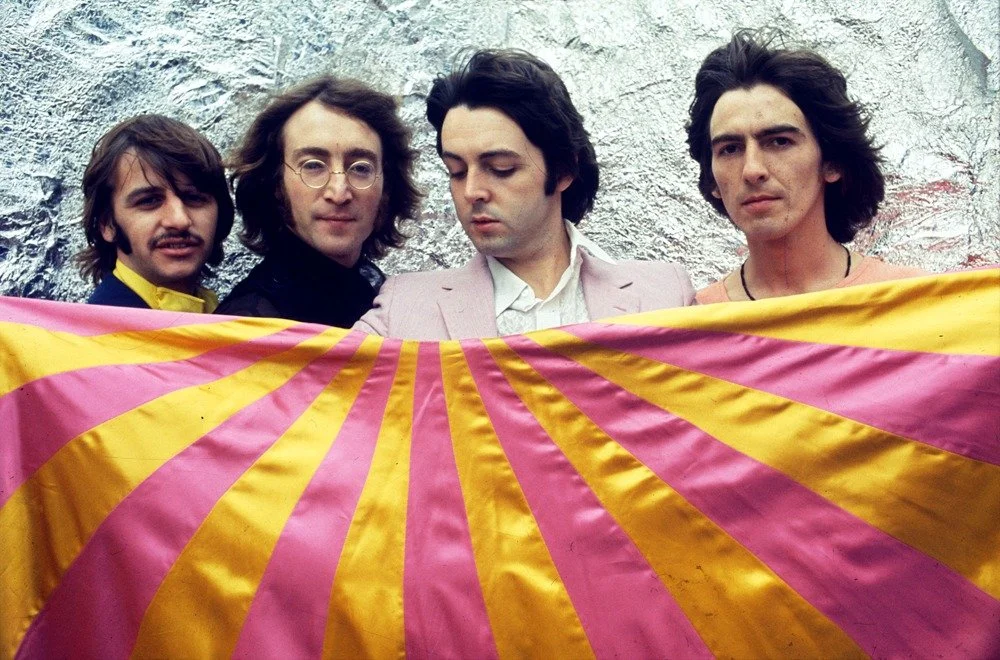
To call something 'overrated' is to say it gets more credit than it deserves. That charge is often leveled at The Beatles, especially by younger listeners growing up in a fractured, algorithm fed music world. It's a reaction that comes from exhaustion: the band’s constant presence in pop culture, their near mythic status among critics, and their unshakable place atop every “greatest band” list. At times, it can feel like too much. But just because The Beatles are everywhere doesn’t mean their reputation is overblown. A closer look, historical, musical, cultural, and technological, shows that their lasting fame isn’t just deserved; it’s essential.
To understand why The Beatles aren’t overrated, you have to appreciate just how much they changed the game. They weren’t just a hit band, they fundamentally altered the way we think about music. The Beatles reshaped everything: how songs are written, how records are made, how music gets out into the world, and the way artists connect with fans. They turned the album into an art form and stretched what pop music could express. Their influence isn’t just big, it’s built into the foundations of modern music. Without them, today’s music scene would look entirely different.
Context: The World Before The Beatles
To really get The Beatles’ impact, you have to start with the world they entered. In the early 1960s, pop music revolved around singles, not albums. Songwriting was mostly the job of professionals in places like Tin Pan Alley or the Brill Building, and performers were expected to interpret, not create. There was a sharp line between “serious” music, think classical or jazz, and pop, which was seen as fleeting and disposable.
Rock and roll was already on the map thanks to pioneers like Elvis Presley, Chuck Berry, and Little Richard. But it was still seen as teen music, not serious art. The notion that a pop group could tell a cohesive story across an entire album, or tackle deep, complex themes, just wasn’t part of the mainstream conversation yet.
Then came four young men from Liverpool: John Lennon, Paul McCartney, George Harrison, and Ringo Starr. Over the next decade, they didn’t just polish pop music; they transformed it.
Songwriting Revolution: From Interpreters to Authors
One of The Beatles’ biggest breakthroughs was showing the world what a self contained band could do. They weren’t the first to write and record their own songs, but they were the first to conquer the globe while doing it, and to keep doing it, album after album.
The Lennon McCartney partnership became legendary for good reason. Their songs weren’t just catchy, they covered an incredible range. In just a few years, they went from simple pop like “Please Please Me” to the introspection of “In My Life,” the haunting beauty of “Eleanor Rigby,” and the wild, psychedelic swirl of “Lucy in the Sky with Diamonds.”
The Beatles took pop songwriting to new places. Sure, they still sang about love, but with more complexity and emotional nuance. “Yesterday” brought a melancholy rarely heard in pop. “Norwegian Wood” examined infidelity with a literary touch. “A Day in the Life” mixed personal stories with surreal images, closer to modern poetry than standard radio fare.
Importantly, The Beatles demonstrated that popular music could be both accessible and sophisticated. They did not abandon melody for experimentation, nor did they sacrifice innovation for commercial appeal. Instead, they achieved a rare synthesis of both.
The Album as Art Form
If The Beatles had only written great songs, they would still be important. But their most profound impact lies in their redefinition of the album as a unified artistic statement.
Before The Beatles, albums were often collections of singles and filler tracks. The idea of the album as a cohesive work, with thematic or conceptual unity, was not the norm. With albums such as Rubber Soul (1965), Revolver (1966), and Sgt. Pepper’s Lonely Hearts Club Band (1967), The Beatles helped establish the album as the primary medium of artistic expression in popular music.
Sgt. Pepper, in particular, is often cited as a turning point. While its status as the “first concept album” is debatable, its ambition and execution were unprecedented. The album presented itself as a performance by a fictional band, blurring the boundaries between identity and art. Its songs flowed into one another, its cover art was densely symbolic, and its production techniques pushed the limits of what was possible in a recording studio.
The album invited listeners to engage with music not as a series of isolated tracks but as a holistic experience. This approach would become a defining feature of rock music in the late 1960s and 1970s, influencing artists from Pink Floyd to Radiohead.
Studio Innovation and the Birth of Modern Production
Another crucial reason The Beatles are not overrated lies in their revolutionary use of the recording studio. Working closely with producer George Martin and engineers at Abbey Road, they transformed the studio from a place of documentation into a site of creation.
Albums like Revolver and Sgt. Pepper introduced techniques that are now standard in modern music production: multitrack recording, tape loops, reverse audio, artificial double tracking, and extensive use of effects. Songs such as “Tomorrow Never Knows” used tape manipulation and drone structures inspired by Indian classical music, creating a sound that was radically ahead of its time.
What is remarkable is not just that they used these techniques, but that they did so in the mid-1960s, with relatively primitive technology. They were effectively inventing new methods of recording as they went, guided by imagination rather than precedent.
This spirit of experimentation helped redefine what recorded music could be. It shifted the focus from live performance to studio creation, paving the way for genres such as psychedelic rock, progressive rock, electronic music, and beyond.
Cultural Impact: Beyond Music
To call The Beatles overrated is to overlook their cultural impact, which extends far beyond music. They were central figures in the social transformations of the 1960s, influencing fashion, attitudes, and identity.
The phenomenon of Beatlemania in the early 1960s was unprecedented. Their popularity transcended national boundaries, making them one of the first truly global pop acts. They helped define youth culture as a distinct social force, separate from older generations.
As their music evolved, so did their public personas. They became associated with the counterculture, exploring themes such as spirituality, psychedelia, and social change. Their embrace of Eastern philosophy, particularly through their association with Maharishi Mahesh Yogi, introduced many Western listeners to concepts such as meditation and transcendence.
Their influence can also be seen in their approach to image and identity. They continually reinvented themselves, moving from clean-cut suits to psychedelic flamboyance. This fluidity of identity would become a defining characteristic of modern pop stardom.
Influence: The Foundation of Modern Music
Perhaps the strongest argument against the claim that The Beatles are overrated is their unparalleled influence. Virtually every major development in popular music since the 1960s can be traced, in some way, back to them.
Artists across genres have cited The Beatles as a primary influence: from David Bowie and Pink Floyd to Oasis and Radiohead. Their innovations in songwriting, production, and album structure have become the foundation of modern music.
This influence is so pervasive that it can become invisible. Many listeners today hear Beatles songs as “simple” or “familiar,” not realising that what sounds familiar is often the result of decades of imitation. The Beatles did not follow conventions; they created them.
Misconceptions: Why Some People Think They Are Overrated
The perception that The Beatles are overrated often arises from several misunderstandings.
First, there is the issue of historical distance. Modern listeners, accustomed to the vast diversity of contemporary music, may find early Beatles songs simplistic. But this simplicity must be understood in context. At the time, their work represented a significant evolution in popular music.
Second, their influence has been so widely absorbed that it can be difficult to recognise their originality. What once sounded revolutionary now sounds normal, precisely because it has been so widely imitated.
Third, there is a tendency to react against canonisation. When something is consistently described as “the greatest,” it invites scepticism. But scepticism should not be confused with critical assessment. The fact that The Beatles are widely praised does not mean that their praise is undeserved.
Diversity and Range
Another key reason The Beatles are not overrated is the extraordinary diversity of their catalogue. Over the course of just a few years, they explored an astonishing range of styles: rock and roll, folk, classical, Indian music, psychedelia, blues, music hall, and avant-garde experimentation.
Few artists have demonstrated such versatility while maintaining a consistent level of quality. Songs as different as “Helter Skelter,” “Blackbird,” “Within You Without You,” and “I Am the Walrus” coexist within the same body of work, each pushing the boundaries of what popular music can be.
This diversity is not merely stylistic. It reflects a broader artistic curiosity, a willingness to explore new ideas and sounds. It is this spirit of exploration that continues to inspire artists today.
Emotional Resonance
Beyond innovation and influence, The Beatles’ music endures because of its emotional power. Their songs speak to universal human experiences: love, loss, longing, joy, confusion, and transcendence.
What sets them apart is their ability to express these emotions with both simplicity and depth. A song like “Let It Be” offers a message of comfort and acceptance, while “A Day in the Life” captures a sense of existential disorientation. Their music operates on multiple levels, allowing listeners to engage with it in different ways.
This emotional resonance is a key reason why their music continues to be discovered by new generations. It is not merely historically important; it remains deeply relevant
Longevity and Continued Relevance
More than half a century after their breakup, The Beatles remain one of the most listened-to bands in the world. Their music continues to be streamed, reissued, and reinterpreted, reaching new audiences across generations.
This longevity is not the result of nostalgia alone. It reflects the enduring quality of their work. Truly overrated art tends to fade over time, its reputation sustained only by cultural inertia. The Beatles, by contrast, continue to resonate with listeners who have no personal connection to their era. Their music is not preserved out of obligation. It is actively chosen.
The Myth of Perfection
It is important to acknowledge that The Beatles were not perfect. Not every song they recorded is a masterpiece, and their later years were marked by internal conflict. But imperfection does not equate to overrating. In fact, their flaws are part of what makes them human and relatable.
What matters is not that every piece of their work is flawless, but that their overall contribution is extraordinary. When viewed as a whole, their catalogue represents one of the most significant bodies of work in modern music.
A Deeper Perspective: The Beatles as Cultural Architects
To fully grasp why The Beatles are not overrated, one must move beyond viewing them as a “band” and see them as cultural architects. They helped construct the very framework within which modern music operates.
They did not simply participate in culture; they reshaped it. They expanded the possibilities of popular music, both artistically and commercially. They demonstrated that music could be a site of innovation, experimentation, and meaning.
In this sense, their importance is not just musical but philosophical. They challenged assumptions about art, identity, and creativity. They opened up new ways of thinking about what it means to be an artist.
Conclusion: Beyond the Question of Overrating
The question of whether The Beatles are overrated ultimately reveals more about contemporary culture than it does about the band itself. It reflects a tension between historical legacy and modern sensibility, between canonisation and scepticism.
But when examined in depth, the evidence is overwhelming. The Beatles are not overrated because their influence, innovation, and cultural impact are not exaggerated. If anything, they are so deeply embedded in the fabric of modern music that their significance can be difficult to fully perceive.
To call them overrated is to misunderstand the scale of their contribution. It is to judge them by standards that they themselves helped create. It is to forget that what now seems familiar was once revolutionary.
In the end, The Beatles are not overrated. They are foundational. Their music is not simply part of history; it is part of the structure of contemporary culture itself. And that is why, decades after their final recording sessions, their work continues to be listened to, studied, and felt.
Not because we are told that it matters.
But because, when we listen closely, it still does.