Bob Marley Documentary Analysis: Ziggy Marley’s Marley and the Legacy of Reggae, Resistance, and Spiritual Revolution
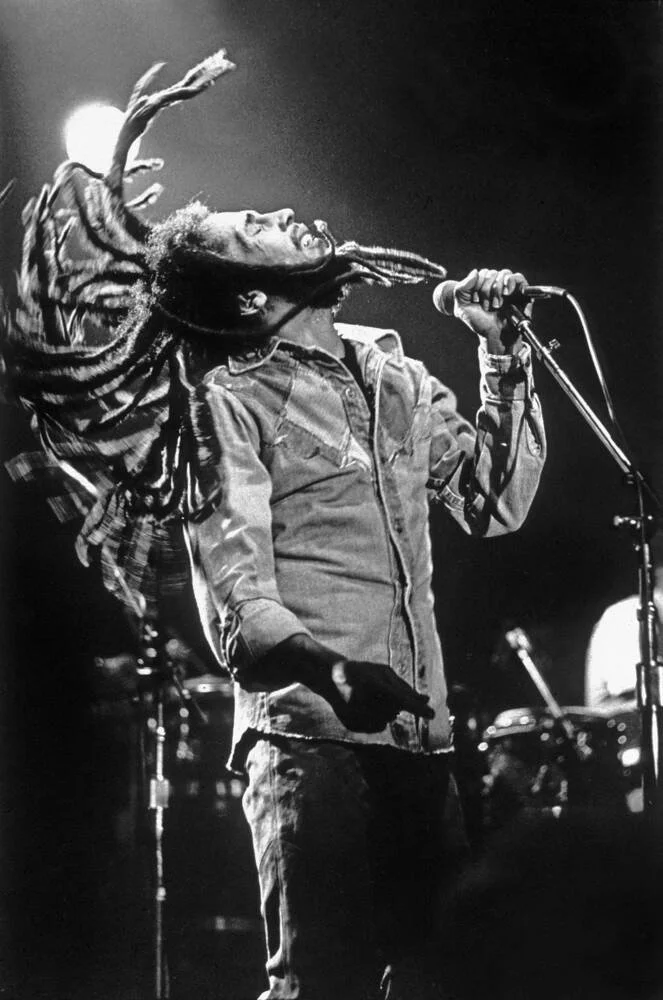
Marley is not simply a documentary; it is an act of remembrance, reconstruction, and reverence. Produced with the involvement of Ziggy Marley, the film offers an intimate and authoritative portrait of Bob Marley, tracing the life of a man who transcended music to become a global symbol of spiritual resistance, political consciousness, and human unity
At its core, Marley is a story about origins. It begins in rural Jamaica, where Marley’s mixed-race identity places him in a liminal space, belonging fully to neither world yet ultimately drawing strength from both. This tension becomes one of the documentary’s central threads: the formation of identity in the face of alienation. From these beginnings, the film charts his gradual evolution from a struggling young musician into the voice of a generation, capturing the birth of Reggae as a global language of resistance and hope.
What distinguishes this documentary is its depth of perspective. Rather than presenting a distant, mythologised figure, it assembles a mosaic of voices family members, collaborators, and contemporaries who collectively reconstruct Marley as both icon and human being. Through interviews with figures such as Rita Marley and Bunny Wailer, the film reveals the contradictions that shaped him: a spiritual seeker and a political force, a devoted family man and a figure of complexity and excess.
The documentary moves fluidly between the personal and the historical. It situates Marley within the volatile political landscape of 1970s Jamaica, where music was not merely entertainment but a weapon capable of both uniting and dividing a nation. Songs like Get Up, Stand Up and Zimbabwe are not treated as isolated works but as responses to real struggles: colonial legacy, racial injustice, and the search for liberation. In doing so, Marley positions music as a form of lived philosophy an articulation of the Rastafari worldview that shaped his life and art.
Yet the film’s emotional gravity lies in its exploration of mortality. Marley’s battle with cancer is portrayed not as a tragic footnote but as a profound confrontation between faith, identity, and the limits of the body. His refusal to fully submit to Western medical intervention, rooted in his spiritual beliefs, becomes emblematic of a larger tension between modernity and tradition. The documentary does not resolve this tension; instead, it allows it to linger, unresolved and human.
Ultimately, Marley is less about closure than continuity. It ends not with death, but with diffusion his voice echoing across continents, his songs sung by strangers, his message carried forward by future generations. Marley’s oft-quoted desire “to see mankind living together” emerges not as naïve idealism, but as a radical and unfinished project.
For The Deep Dive Society, this documentary stands as a powerful reminder that art, at its highest level, is inseparable from life itself. Marley’s music was never just sound it was a philosophy, a protest, a prayer. And in this film, we are invited not just to observe that legacy, but to feel its weight, its urgency, and its enduring relevance in a fractured modern world.
