Iron Maiden: Burning Ambition: Heavy Metal, Mythology, and the Long Road from East London to Eternity.
There are some bands whose story can be told through sales figures, chart positions, and landmark albums. Iron Maiden, however, demand a different kind of telling. Their history is not simply the story of a successful heavy metal band. It is the story of belief, endurance, mythology, working-class ambition, artistic stubbornness, visual imagination, and the strange spiritual power that music can hold over people’s lives. Iron Maiden: Burning Ambition, directed by Malcolm Venville and produced by Dominic Freeman, arrives as a documentary about fifty years of one of Britain’s most important heavy metal institutions. The official announcement describes the film as charting Iron Maiden’s “five-decade journey,” from their beginnings in East London to global stadiums, and notes the band’s astonishing record of 17 studio albums, over 100 million records sold, and almost 2,500 concerts across 64 countries (Iron Maiden). Yet the real subject of the film is not only longevity. It is the question of how a band so loud, theatrical and uncompromising became something close to a world culture.

The title Burning Ambition is perfect because ambition has always been at the centre of Iron Maiden’s identity. This was not ambition in the glossy, corporate sense. Maiden did not become huge by smoothing away their peculiarities, chasing radio trends or pretending to be more respectable than they were. Their ambition burned from below. It came out of pubs, vans, rehearsal rooms, cheap stages, leather jackets, hand-painted backdrops and the restless desire of young musicians who believed that heavy metal could be bigger, faster, stranger and more imaginative than the world allowed it to be. In the documentary, the band’s rise from East London pubs to the world’s biggest stages becomes more than a familiar rock-and-roll success story. It becomes a study in creative willpower. Iron Maiden were not simply trying to become famous. They were trying to build a universe.
That universe began with Steve Harris. Every great band has its centre of gravity, and Harris has always been Maiden’s. Founder, bassist, songwriter, organiser and stubborn visionary, he represents the unglamorous discipline beneath the spectacle. The documentary’s power lies partly in showing that Iron Maiden’s mythology did not emerge by accident. Behind the galloping bass lines, the historical epics, the aircraft hangars, the Egyptian stages, the military imagery and the monstrous figure of Eddie, there was a very practical kind of obsession. Harris wanted a band that sounded like itself, moved like itself and answered to itself. This matters because heavy metal has often been caricatured as primitive, excessive or adolescent. Maiden prove the opposite. Their music is not simple noise. It is architecture. It is speed and drama arranged with almost classical purpose.
The East London setting is crucial to the story. Iron Maiden did not emerge from privilege, art-school cool or fashionable approval. They came from a hard-working environment where credibility had to be earned in front of real audiences. The early years were not romantic in the easy sense. They were difficult, physical, repetitive and uncertain. The band played wherever they could, slowly building a following before heavy metal had become a fully organised global market. The Guardian’s 2026 interview around the documentary places them within the New Wave of British Heavy Metal, a movement of do-it-yourself ethics, pub gigs, denim, leather and eccentric theatricality (The Guardian). That background gives the documentary its emotional foundation. Maiden’s later scale only makes sense if we understand the small rooms from which they came.
One of the most interesting things about Burning Ambition is how it reframes heavy metal as a serious imaginative tradition. Iron Maiden have always drawn from literature, history, horror, war, mythology and philosophy. Their songs are full of doomed soldiers, ancient mariners, tyrants, prisoners, prophets, dreamers and men confronted by death. This is one reason their music has lasted. It is not trapped inside one decade’s fashion. Maiden built their songs out of subjects that already possessed dramatic weight. A track like “The Trooper” is not just a fast metal anthem; it is a miniature war painting. “Rime of the Ancient Mariner” is not just a long song; it is proof that a heavy metal band could transform Romantic poetry into an epic stage experience. “Hallowed Be Thy Name” is not just a classic closing track; it is a meditation on mortality, fear and the final moments of consciousness.
The documentary also reminds us how important image has been to Iron Maiden’s success. In many bands, visual identity is decoration. With Maiden, it is inseparable from the music. Eddie, the band’s undead mascot, is one of the most recognisable figures in rock history because he functions almost like a mythological trickster. He is corpse, soldier, pharaoh, cyborg, prisoner, executioner and time traveller. He changes costume while remaining unmistakably himself. Rotten Tomatoes’ synopsis notes that Burning Ambition includes new animated sequences of Eddie, alongside archive material and interviews with band members and admirers (Rotten Tomatoes). This is important because Eddie is not merely a logo. He is the visual symbol of Maiden’s entire project: death made theatrical, fear made thrilling, horror turned into energy.
In that sense, Iron Maiden sit closer to older forms of popular theatre than many critics have recognised. Their concerts are not simply performances of songs. They are rituals of transformation. The stage becomes battlefield, temple, nightmare, aircraft hangar, graveyard or cosmic arena. Bruce Dickinson does not merely sing; he acts, declaims, charges and narrates. The guitars do not only provide riffs; they create movement, tension and heroic release. The audience does not passively consume the spectacle; it becomes part of it. This is why the documentary’s focus on fans matters. The official material describes the film as including reflections from prominent admirers such as Javier Bardem, Lars Ulrich and Chuck D, speaking to Maiden’s influence across music, culture and generations (Iron Maiden). The presence of those voices suggests that Maiden’s reach has gone far beyond genre boundaries.
The band’s connection with its audience is one of the deepest themes in the documentary. Iron Maiden fans are famously loyal, but loyalty alone does not explain the intensity. The relationship feels closer to membership in a travelling republic. Maiden fans are not just consumers; they are participants in a shared language. They know the artwork, the chants, the lyrics, the patches, the tours, the bootlegs, the setlists, the arguments over singers, the sacred albums and the supposedly underrated eras. This kind of fandom is not built overnight. It is created through repetition, consistency and trust. Maiden kept returning. They toured relentlessly. They took the music to places where other bands had not always treated audiences as central. In doing so, they turned geography into community.
That global community is one of the reasons Iron Maiden are culturally significant. British rock history often focuses on the Beatles, the Stones, punk, glam, Britpop and alternative music. Heavy metal is sometimes treated as a side road, loud and colourful but less intellectually respectable. Maiden challenge that hierarchy. Their career proves that heavy metal is not marginal to British culture; it is one of Britain’s most successful cultural exports. Their music carried East London grit into arenas across Europe, South America, Asia, North America and beyond. This is not only a commercial fact. It is a cultural one. Maiden showed that stories of war, death, rebellion, madness and endurance could speak across languages when fused with melody, discipline and spectacle.
The documentary also has to deal with the problem of change. No band survives fifty years without rupture. Iron Maiden’s history includes lineup changes, exhaustion, creative tensions, commercial shifts and the difficult 1990s, when much of 1980s metal seemed out of step with grunge, alternative rock and nu-metal. The Guardian interview around the film discusses the departure of Paul Di’Anno, the arrival of Bruce Dickinson, Adrian Smith’s exit, Dickinson’s later departure, the Blaze Bayley era and the eventual return of Dickinson and Smith in 1999 (The Guardian). What makes Maiden interesting is that these changes did not destroy the band’s identity. They tested it.
Paul Di’Anno’s role in the story deserves respect. The earliest Maiden records have a rawness that later albums transformed but never completely abandoned. Di’Anno brought street-level danger, punk energy and rough charisma. The first two albums, Iron Maiden and Killers, do not yet have the operatic grandeur of the Dickinson era, but they possess urgency, sweat and hunger. They are the sound of a band clawing its way into existence. Any documentary about Maiden must understand that the band’s later mythology was built upon this rough early foundation. Without that initial aggression, the later epics might have become empty theatre. Di’Anno gave Maiden a human snarl before Dickinson gave them wings.
Bruce Dickinson’s arrival changed everything. His voice expanded the band’s emotional and theatrical range. It was not only that he could sing higher or louder. It was that he could inhabit Maiden’s stories with almost Shakespearean force. With Dickinson, the band could sound ancient, military, prophetic, doomed or triumphant. The Number of the Beast, Piece of Mind, Powerslave and Seventh Son of a Seventh Son became the core of the classic Maiden identity because they fused musicianship with drama. These albums did not ask heavy metal to become respectable by becoming smaller. They made it grander. They insisted that metal could contain literature, history, fantasy, politics and existential terror without apology.
That refusal to apologise is one of the reasons Iron Maiden matter. Heavy metal has often been mocked by outsiders because it is excessive. But excess is not always a weakness. Sometimes excess is the form truth takes when ordinary language is too small. Maiden understood that adolescence, fear, anger, fantasy and mortality are not trivial subjects. They are human subjects. The skulls, flames, swords and battlefields are not merely decorative clichés. At their best, they are symbolic exaggerations of real emotional states. To be young and powerless can feel like standing before an empire. To confront death can feel like facing a monster. To survive despair can feel like escaping a battlefield. Maiden’s imagery works because it turns private intensity into shared mythology.
The film’s archive material is therefore more than nostalgia. Archive footage in music documentaries can easily become a sentimental parade of old haircuts and vanished youth. But with Iron Maiden, the archive is evidence of continuity. The young band in the pubs and the older band in stadiums are different in scale, but not in essence. The same hunger runs through them. The same insistence on movement, force and identity remains. That continuity is rare. Many bands reinvent themselves because survival demands it. Maiden evolved, but they did not betray their central language. They became more progressive, more global and more elaborate, but they remained recognisably Maiden.
This raises one of the most important questions in the documentary: how does a band remain itself without becoming a museum of itself? The answer is not simple. There is always a danger that a long-running band becomes trapped by its own iconography. Fans want the classic songs, the familiar imagery, the old rituals. Yet art survives only if it retains some connection to risk. Maiden’s later career is fascinating because they did not simply become a nostalgia act. Albums such as Brave New World, A Matter of Life and Death, The Final Frontier, The Book of Souls and Senjutsu show a band increasingly comfortable with long forms, progressive structures and reflective atmosphere. Not every listener loves every late-period experiment, but the ambition remains genuine.
That ambition links Maiden to progressive rock as much as to metal. Beneath the speed and aggression, Harris has always been drawn to extended structures, repeating motifs, dramatic transitions and narrative arcs. Maiden songs often move like journeys. They begin with atmosphere, gather force, change landscape, reach crisis and return transformed. This is why the band’s best music feels cinematic. It does not merely express a mood; it stages an event. Burning Ambition benefits from this because Maiden’s career itself has the shape of one of their songs: a small beginning, a rapid ascent, moments of danger, a dark middle passage, a heroic return and an unresolved continuation.







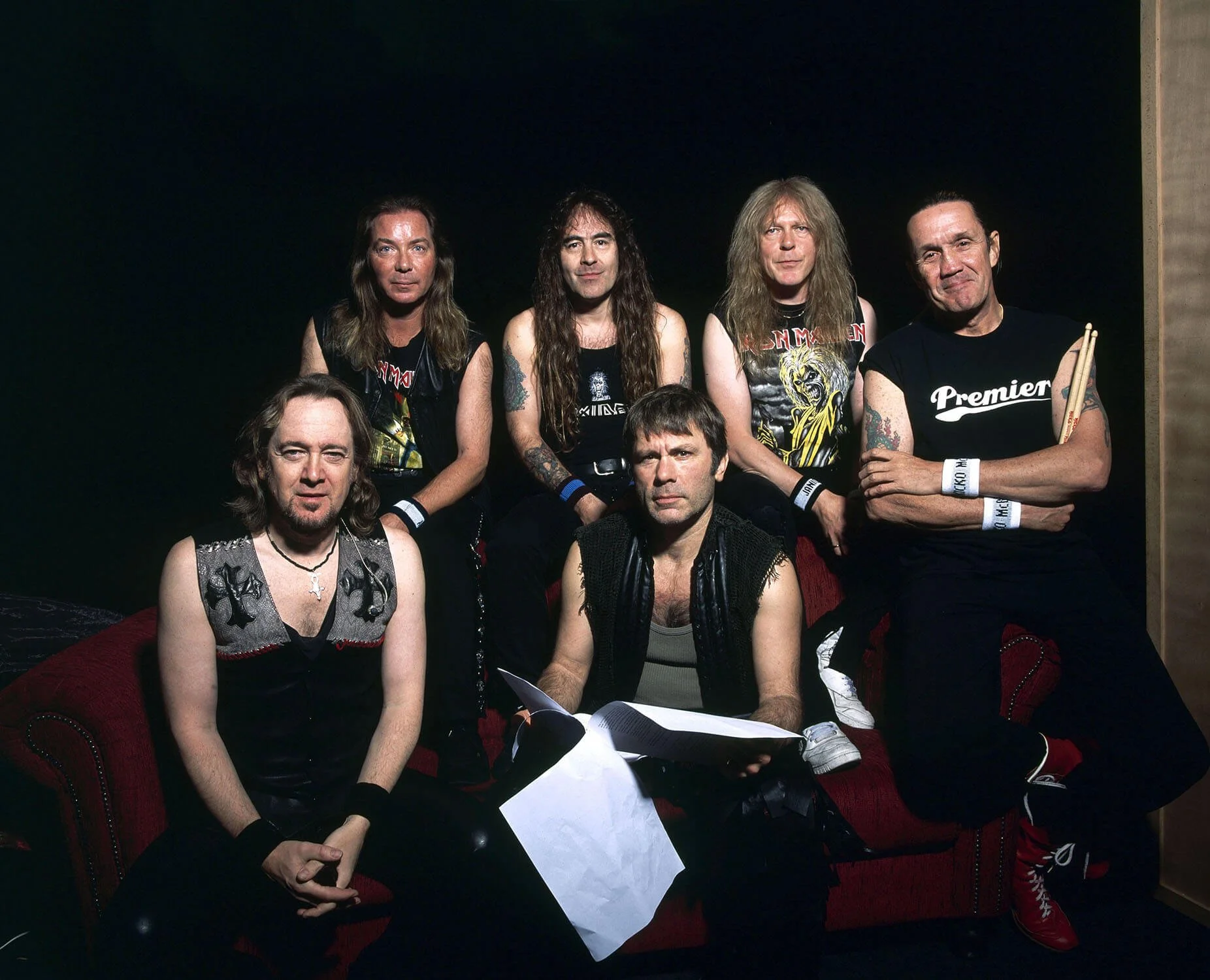



The documentary’s release during the band’s 50th anniversary period gives it an elegiac force. Fifty years is long enough for a band to become historic while still remaining active. That creates a strange tension. Iron Maiden are not finished, but they now belong to history. Their story is no longer only unfolding; it is being interpreted. This is why Burning Ambition matters as a cultural document. It is part celebration, part archive and part act of canonisation. It argues, implicitly or explicitly, that Maiden’s place in music history is not up for debate. They are not merely a metal band loved by metal fans. They are one of the defining British bands of the modern era.
The phrase “burning ambition” also carries a darker meaning. Ambition burns. It gives light, but it also consumes. Maiden’s story includes exhaustion, pressure and personal cost. The romantic image of the touring band often hides the bodily and psychological toll of constant movement. The classic 1980s cycle of album, tour, album, tour created greatness, but it also created strain. Dickinson has spoken about feeling trapped by the demands of endless touring, and the wider history of the band shows how communication failures and fatigue contributed to major departures. The documentary is strongest when it allows these shadows into the story. Celebration without cost becomes propaganda. Maiden’s achievement is more impressive because it was not easy.
Yet there is something deeply life-affirming about the band’s survival. Iron Maiden’s music is full of death, but the band’s career is full of life. Their songs face mortality by turning it into motion. They do not deny darkness; they gallop through it. That may be the secret of their appeal. Maiden give listeners a way to experience fear, violence, history and doom without surrendering to despair. The music is too energetic to be nihilistic. Even at its darkest, it moves forward. The gallop itself becomes a philosophy. Keep going. Keep running. Keep playing. Keep building the stage, raising the lights, summoning the monster and singing into the flames.
This is why Iron Maiden’s appeal crosses generations. For older fans, the documentary offers memory: first records, first gigs, denim jackets, posters, bedrooms, friendships, youth. For younger fans, it offers initiation: the discovery that this vast world existed before them and is still open to them. Maiden have become one of those bands people inherit, like a set of myths passed from one generation to another. A teenager discovering Powerslave today is not simply listening to an old album. They are entering a symbolic system that millions have already inhabited. That is rare in popular music. Most bands date. Maiden endure.
The film also prompts a wider defence of heavy metal as an art form. For too long, metal has been judged by people who do not understand its codes. They hear distortion and miss melody. They see monsters and miss metaphor. They hear theatrical vocals and miss storytelling. Iron Maiden expose the laziness of that dismissal. Their music requires stamina, musicianship, memory and imagination. Their best songs are not disposable eruptions of noise but carefully constructed dramatic works. One does not have to like heavy metal to recognise the seriousness of the craft. Burning Ambition is valuable because it places that craft within a long historical frame.
What makes Maiden especially compelling is their independence from coolness. They have never seemed interested in being fashionable. This may be why they have lasted. Fashion gives quickly and takes away even faster. Maiden’s world is too specific to be absorbed by passing trends. Their refusal to chase the mainstream became, paradoxically, the reason they achieved mainstream scale. They built their own road and invited people to follow. In an age when artists are often pressured to become content machines, Maiden’s story feels newly relevant. They remind us that identity matters. A band, a writer, a painter or any creative person must eventually decide what they are willing to protect.
The documentary’s use of celebrity admirers could have been a weakness, but it also demonstrates the breadth of Maiden’s influence. When figures from different corners of culture speak about the band, they show that Maiden’s impact is not confined to one subculture. Metallica’s Lars Ulrich, actor Javier Bardem and hip-hop legend Chuck D represent very different creative worlds, yet all can recognise something in Maiden’s force. That something may be integrity. It may be theatricality. It may be the democratic power of loud music. It may simply be the thrill of watching a band become itself so completely that the world has to come to them.
At its heart, Iron Maiden: Burning Ambition is about faith. Not religious faith, despite the band’s long fascination with biblical and occult imagery, but artistic faith: the belief that a vision can be built, protected and carried across time. Maiden’s faith was not abstract. It was proven through work. Through writing, rehearsing, touring, arguing, failing, returning and refusing to disappear. That is what gives the documentary its emotional charge. It is not only about talent. It is about persistence. Many bands are gifted. Far fewer build a world that can last fifty years.
The film’s greatest achievement may be that it understands Iron Maiden as both human and mythic. The human story is one of young men from East London, hard work, changing lineups, bruised egos, exhaustion, ageing and survival. The mythic story is one of Eddie, battlefields, ancient curses, doomed sailors, charging cavalry, burning skies and crowds roaring as one. The genius of Maiden is that these two stories cannot be separated. The myth came from the human labour. The labour was sustained by the myth. Together, they created something larger than entertainment.
In the end, Burning Ambition is not simply a documentary about Iron Maiden’s past. It is a reminder of what cultural endurance requires. It requires vision, but also discipline. It requires imagination, but also organisation. It requires loyalty, but also renewal. It requires the courage to be misunderstood. Above all, it requires a refusal to reduce art to what is fashionable, polite or easily marketable. Iron Maiden became giants because they never tried to become smaller for anyone’s comfort.
For The Deep Dive Society, the significance of Iron Maiden: Burning Ambition lies in the way it turns a heavy metal story into a larger meditation on art, identity and survival. Maiden’s music may be built from distortion, galloping rhythms and operatic force, but beneath it lies something profoundly human: the desire to give shape to fear, to make myth out of struggle, and to turn private obsession into a shared world. That is why Iron Maiden still matter. Not because they sold millions of records. Not because Eddie became iconic. Not because stadiums still chant their songs. They matter because they prove that imagination, when pursued with enough conviction, can become a home for millions of people.
And perhaps that is the real burning ambition: not fame, not conquest, not even legacy, but the desire to create something that outlives the moment of its making. Iron Maiden began in East London, but they did not remain there. They became a sound, a symbol, a ritual, a language and a map for anyone who ever felt the world was too small for the scale of their inner life. Burning Ambition captures that journey. It shows that heavy metal, at its most powerful, is not an escape from seriousness. It is seriousness in flames.
