It’s Never Over, Jeff Buckley, The Man Behind the Myth of the Doomed Romantic

There is a danger inherent in telling the story of Jeff Buckley. He died at thirty. He left behind a single completed studio album. He possessed one of the most extraordinary voices of his generation. His father, the singer-songwriter Tim Buckley, had also died young. And the circumstances of Jeff's death, an accidental drowning in Memphis in 1997, ensured that his already romantic music became inseparable from a mythology of absence, longing and unrealised possibility.
Everything is there for the creation of a beautiful tragedy. Amy Berg's It's Never Over, Jeff Buckley understands this danger. More importantly, it spends much of its 106 minutes attempting to resist it. Rather than treating Buckley as the doomed poet he has so often become in popular memory, Berg tries to recover the person buried beneath the legend: funny, contradictory, restless, ambitious, insecure, occasionally difficult, sexually charismatic, musically obsessive and capable of being deeply vulnerable. Drawing upon previously unseen archive footage, photographs, notebooks, answering-machine messages and interviews with those who actually knew him, the documentary's most significant achievement is remarkably simple. It allows Jeff Buckley to become human again. And in doing so, it makes his loss feel greater rather than smaller.
A Voice Frozen in Time
For many listeners, Jeff Buckley exists almost entirely through Grace. Released in 1994, it remains one of those unusual records whose reputation has only expanded rather than diminished with time. Buckley's interpretation of Leonard Cohen's "Hallelujah" became vastly more famous after his death, but reducing him to that performance obscures the astonishing breadth of his musical imagination. Buckley absorbed everything.
Nina Simone. Édith Piaf. Led Zeppelin. Nusrat Fateh Ali Khan. Punk. Folk. Soul. Qawwali. Jazz. Experimental rock. Cohen. What emerged was not simply a collection of influences but a musician apparently uninterested in respecting the borders between them. His voice could move from an intimate whisper to an almost operatic cry, while his guitar playing could be delicate one moment and violently physical the next. Critics have often remarked on his four-octave range, but technical descriptions cannot quite explain what made Buckley's singing extraordinary.
The remarkable thing was not merely how high he could sing. It was how exposed he sounded while doing it. Berg wisely understands that Buckley's musicianship cannot be explained solely through talking heads. We need to hear him. We need to watch him. The documentary's archival material therefore becomes its greatest asset.
Footage of Buckley's performances at the tiny New York café Sin-é is particularly important. Before the record contracts, international touring and expectations surrounding Grace, there was simply a young musician with a guitar, a frighteningly large musical vocabulary and an audience close enough to touch him. These sequences contain something that the mythology surrounding Buckley sometimes obscures: joy.
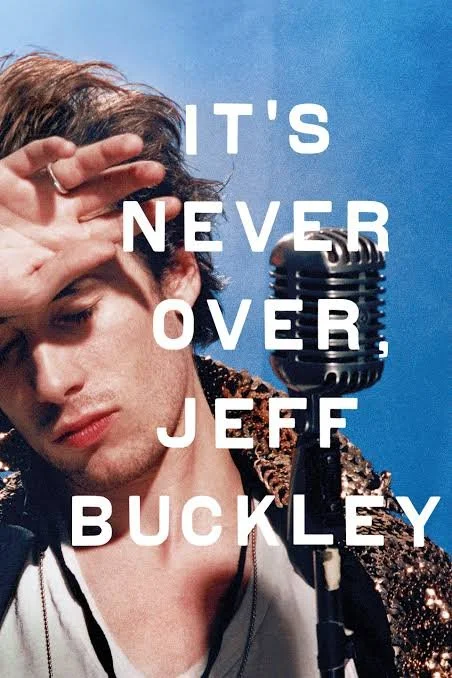
He was not permanently wandering through life as the melancholy figure suggested by the photographs that later became iconic. He could be mischievous, absurd and playful. His answering-machine messages could become elaborate performances of their own. He impersonated voices. He joked. He flirted. He seemed to approach music not only as confession but as play. The archive lets us glimpse this other Buckley. And that matters.
The Problem of Tim Buckley
Any account of Jeff Buckley's life inevitably encounters his father.
Tim Buckley was himself a remarkable singer-songwriter, an experimental figure whose work moved through folk, jazz, psychedelia and avant-garde territory before his death from an overdose in 1975 at twenty-eight. But the romantic symmetry between father and son, two beautiful, gifted singers, both dead before reaching middle age, can easily become irresistible to storytellers. Jeff himself had considerably less interest in the comparison. His relationship with Tim was defined principally by absence. He barely knew his father, meeting him only once as a child, and throughout his career resisted attempts to transform himself into the inheritor of some musical dynasty. Berg's film is careful not to allow Tim's ghost to swallow Jeff's identity. That distinction becomes essential. Jeff Buckley did not simply continue his father's story. He spent part of his life attempting to escape it. Yet there is something psychologically fascinating about an artist trying to establish an identity while constantly being asked to explain himself through someone who was largely absent from his life. The surname becomes both inheritance and burden. Fame would create another identity for him to resist.
Becoming Jeff Buckley
One of the documentary's most compelling sections concerns Buckley's emergence in New York. His performances at Sin-é have since become part of music folklore, but Berg's archive helps restore something of their original intimacy. Watching him experiment with songs and inhabit other people's music, we see an artist forming himself publicly. This is where the documentary comes closest to answering the impossible question of where Jeff Buckley came from artistically. There was no single source. His musical identity appears almost voracious. Buckley listened across genres and traditions with seemingly little concern for conventional ideas about authenticity. One of the documentary's most delightful moments involves his encounter with Pakistani Qawwali master Nusrat Fateh Ali Khan, one of Buckley's great musical heroes. Buckley's enthusiasm for Khan's music reveals the seriousness with which he approached traditions far beyond American rock. That curiosity is central to understanding Grace.
The album can sound strangely timeless because it never completely belongs to the early 1990s. It emerged during the age of grunge but does not sound particularly grunge. It contains rock music without comfortably becoming a rock record, folk without becoming folk, romanticism without surrendering entirely to sentimentality. Its emotional world feels simultaneously ancient and modern. That may explain why Buckley's music continues to attract listeners born long after his death. The songs do not feel preserved in the 1990s. They still feel unresolved.
The Women Who Remember Him
Perhaps Berg's most consequential decision is to allow Buckley's story to be told substantially through women. His mother Mary Guibert is central, alongside former partners Rebecca Moore and Joan Wasser. Aimee Mann also contributes, while bandmates and musicians including Michael Tighe, Parker Kindred and Ben Harper help construct the larger portrait. This changes the emotional texture of the conventional rock documentary. There are relatively few distant commentators explaining Buckley's "importance." Instead, we repeatedly encounter people remembering somebody they loved. The distinction is enormous.
Rebecca Moore and Joan Wasser are not discussing an icon printed on a T-shirt. They are remembering a man who occupied their kitchens, bedrooms, conversations and ordinary days. Mary Guibert is not discussing one of the great singers of the 1990s. She is discussing her son. Consequently, It's Never Over becomes as much a documentary about memory as music. Who owns the memory of someone after they die?
The public remembers Buckley through Grace, photographs, bootlegs and "Hallelujah." His friends remember jokes. Lovers remember intimacy and frustration. His mother remembers a child. None of these versions is necessarily false. But none is complete. Somewhere between them exists Jeff Buckley.
The Myth and the Man
This tension becomes the documentary's philosophical centre. Death freezes artists. John Lennon remains forty. Kurt Cobain remains twenty-seven. Amy Winehouse remains twenty-seven. Jeff Buckley remains thirty. The living continue ageing while the dead remain trapped inside photographs. That creates a peculiar relationship between audience and artist. We know Buckley cannot disappoint us with a mediocre late-career album. He cannot embarrass himself. He cannot become unfashionable, retreat into domestic life, make terrible political statements, release a Christmas record or simply grow old. His artistic story remains permanently unfinished. And unfinished things invite projection. We imagine the albums he might have made.
We imagine the musician he might have become. But the imaginary Jeff Buckley will always possess an advantage over the real person: he never has to exist. Berg's documentary is at its strongest whenever it quietly dismantles that fantasy. The real Buckley was not simply the ethereal figure suggested by Grace. He could be ambitious while distrusting ambition, attracted to recognition while frightened by celebrity, enormously confident in his abilities while simultaneously uncertain about whether he could fulfil the expectations placed upon him. These contradictions make him more interesting. They also make Grace more interesting.
The Burden of Grace
Imagine making Grace and then having to make another record. This may be the most psychologically interesting question in the entire documentary. The success and growing reputation of Buckley's debut created an impossible situation: the young musician who had once possessed extraordinary freedom was suddenly required to reproduce something that had emerged precisely from experimentation. The music industry had discovered Jeff Buckley. Now it wanted another Jeff Buckley album. The documentary traces the increasing pressure surrounding the follow-up that would eventually become the posthumous Sketches for My Sweetheart the Drunk. Buckley relocated to Memphis and struggled through recordings, ideas and expectations. The problem was no longer simply writing songs. It was writing songs while everyone was waiting for greatness. The pressure surrounding the successor to Grace forms one of the documentary's central threads, revealing a musician increasingly uncomfortable beneath the weight of expectation. There is an uncomfortable lesson here about the way culture treats artists. We claim to desire originality. Then, once someone creates something original, we ask them to reproduce it.
Jeff Without "Hallelujah"
Berg also performs an important corrective simply by presenting the breadth of Buckley's musical world. For millions, Jeff Buckley has effectively become the man who sang "Hallelujah." It is unquestionably a magnificent recording. His interpretation transformed Cohen's song into something extraordinarily intimate and has subsequently become one of the most famous versions ever recorded. But its ubiquity has distorted Buckley's legacy. He was not primarily an interpreter of Leonard Cohen. He was a songwriter.
Listen instead to "Grace", "Mojo Pin", "Last Goodbye", "So Real" or "Lover, You Should've Come Over" and another Buckley emerges: stranger, more sensual, more musically adventurous and sometimes more disturbing than the saintly figure created by posthumous reputation. There is physicality in this music. Desire. Jealousy. Fear. Spiritual longing. Sex. Abandonment. Buckley's romanticism was rarely comfortable. Love in his songs often feels like standing on the edge of disappearance. That emotional instability is precisely what makes the music endure.
The Archive Speaks
Formally, It's Never Over does not completely escape the conventions of the prestige music documentary. Its structure remains broadly chronological: childhood, artistic awakening, New York, Sin-é, Grace, fame, pressure, Memphis and death. That familiarity is perhaps the film's greatest limitation.
At times one wishes Berg had trusted the fragmented nature of Buckley's archive enough to create something formally stranger, a film structured less like biography and more like memory. Other critics have raised similar reservations, noting that despite the exceptional archive, the film sometimes returns to familiar biographical-documentary grammar. The animated sequences built around Buckley's notebooks and writing are visually expressive, although occasionally they explain emotions that his recorded voice already communicates perfectly well. Yet the conventional structure may also explain why the intimate material hits so powerfully. Berg does not need to manufacture Jeff Buckley. She has him. His voice survives in telephone messages. His thoughts survive in notebooks. His body survives in grainy video. His performances survive on tape. There are moments when the documentary begins to feel less like a biography assembled after someone's death than a conversation temporarily resumed. Then the recording stops. And we remember why we are watching.
The Death the Film Refuses to Romanticise
On 29 May 1997, Jeff Buckley went swimming in the Wolf River Harbor in Memphis and drowned. He was thirty years old.
Any filmmaker approaching this moment faces an obvious temptation. Everything in Buckley's story seems designed for retrospective symbolism: the absent father who died young, the son who also dies young, the unfinished album, the beautiful voice suddenly silenced. Berg largely refuses that temptation.
Buckley's death was an accident, not the inevitable final act of some predetermined artistic tragedy. Magnolia's account of the film likewise describes his death as an accidental drowning, and the documentary avoids converting it into a romantic rock-and-roll conclusion. That restraint is essential. Because there is nothing romantic about dying at thirty. The mythology of the doomed artist can become strangely comforting. It turns catastrophe into narrative. Death becomes destiny; suffering becomes evidence of genius. But sometimes a terrible thing is simply terrible. A person went into the water and did not return. Everything else was what might have happened.
What Remains
Near the end of the film, the meaning of its title becomes increasingly clear. It's Never Over. The phrase comes from "Lover, You Should've Come Over", but Berg allows it to acquire another meaning entirely. For the people who loved Jeff Buckley, his death did not conclude their relationship with him. Grief rarely works that neatly. The dead continue appearing inside the lives of the living — through photographs, objects, songs, gestures, anniversaries, places and memories that arrive unexpectedly decades later. This is where Mary Guibert's presence becomes especially moving. Public culture can transform Buckley into an icon because icons are manageable. A mother cannot. Likewise, his former partners cannot simply encounter the music as listeners do. The songs carry private histories inaccessible to the rest of us.
One particularly affecting element of the documentary is Buckley's recorded voice communicating directly with the people he loved. Berg spent years seeking permission to use some of these materials; Guibert first shared intimate messages with her in 2012 and ultimately approved their use years later. We are accustomed to hearing Jeff Buckley sing. Hearing him simply speak can somehow be more devastating.
The Cruel Gift of the Unfinished
There is ultimately no way to separate It's Never Over, Jeff Buckley from the enormous absence at the centre of its story. What would Jeff Buckley have become? There is no answer. Perhaps he would have made another masterpiece. Perhaps he would have abandoned rock music. Perhaps he would have disappeared for years. Perhaps he would have made difficult experimental records that alienated the people waiting for another Grace. Perhaps he would have become ordinary. The temptation to imagine these futures is understandable, but it also reveals something uncomfortable about the way we consume dead artists. We fall in love not only with what they created but with everything they never had the opportunity to create. Buckley's unfinished career becomes an empty room into which listeners can place their own fantasies. Berg cannot resolve that absence. Wisely, she does not try.
Final Thoughts
It's Never Over, Jeff Buckley is not a radical reinvention of the music documentary. Its architecture is recognisable, occasionally even conventional. Viewers already deeply familiar with Buckley's biography may encounter relatively few revelations about the broad chronology of his career.But biography is not where the film's real value lies. Its achievement is intimacy. Amy Berg has assembled something closer to an emotional archive than a definitive explanation of Jeff Buckley. Through the people who knew him, the messages he left behind, his notebooks, photographs and extraordinary performances, the familiar icon begins to dissolve. In his place appears a young man. A son trying to escape the shadow of a father he barely knew. A musician consuming every sound he could find. A performer discovering what his voice could do. A lover capable of devotion and contradiction. An ambitious artist frightened by the machinery gathering around him. A thirty-year-old attempting to work out what came after Grace. That final image may be the most important. Because Jeff Buckley did not know he was becoming Jeff Buckley. He did not know that Grace would eventually be treated as sacred. He did not know that generations of listeners would discover "Lover, You Should've Come Over" and hear their own heartbreak inside it.
He did not know that his recording of "Hallelujah" would eventually become almost unavoidable. And he certainly did not know that nearly three decades after his death people would still be trying to understand him. He was simply living inside the uncertainty of his own unfinished life. Perhaps that is why the documentary's title feels so appropriate. Art makes chronology behave strangely. A singer can die in 1997 and still enter someone's life for the first time tomorrow. A twenty-year-old can discover Grace decades after it was recorded and experience that voice not as history but as presence. The body disappears. The recording does not. Jeff Buckley remains thirty years old whenever the needle falls onto Grace. He takes the breath. The guitar enters. The voice rises again. For a few minutes, the future that never happened ceases to matter. There is only the voice. And then, when the song ends, there is silence. Until someone presses play again.
Sources
