The Exorcist (1973): Faith, Fear, and the Crisis of the Modern Soul
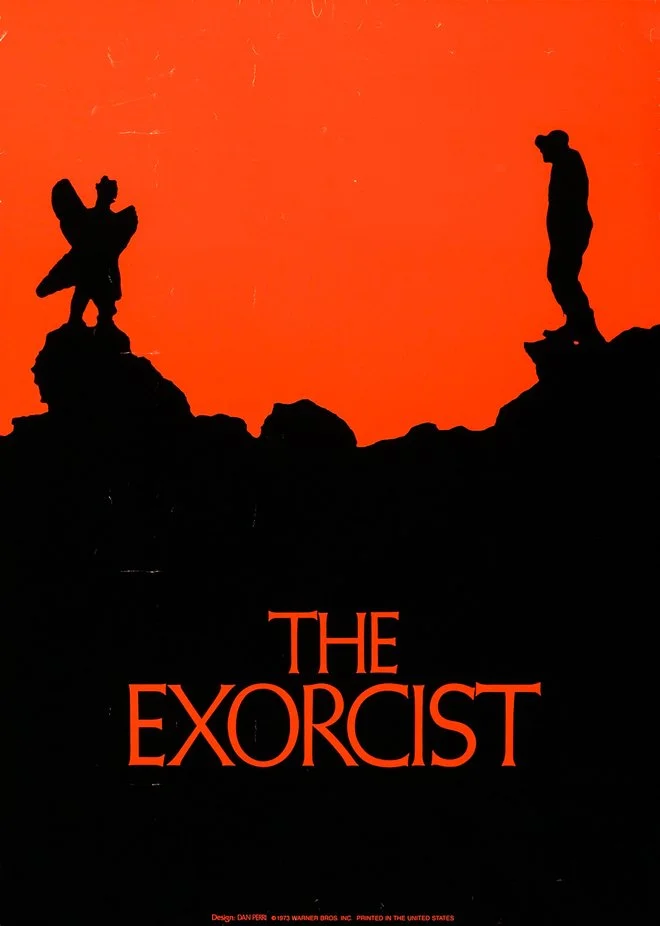
In 1973, The Exorcist arrived not simply as a horror film, but as a cultural rupture. Directed by William Friedkin and adapted from William Peter Blatty’s novel, it transformed the horror genre from something gothic, stylised, and safely distant into something immediate, invasive, and disturbingly plausible. What made The Exorcist so unsettling was not merely its shocking imagery, though those images would become infamous. It was the film’s insistence that the supernatural was not elsewhere, not confined to castles or ancient ruins, but embedded within the modern world. A Georgetown townhouse becomes the site of metaphysical war. A child becomes the battlefield. A mother becomes the witness to something she cannot understand. This is not simply a film about possession. It is a film about the collapse of certainty.
The Story: A Simple Narrative, A Vast Abyss
At its surface, The Exorcist tells a deceptively simple story. A young girl, Regan MacNeil, is possessed by a demonic entity. Her mother, Chris, desperate and increasingly helpless, turns first to medicine, then to psychiatry, and finally to the Catholic Church. Two priests, Father Merrin and Father Karras, are called to perform an exorcism.
Yet beneath this narrative lies something far more expansive. The film operates less like a conventional story and more like a gradual descent. Each stage, medical, psychological, and spiritual, represents a layer of modern understanding being stripped away. Science fails. Reason fails. Language itself begins to fail. What remains is something older, darker, and fundamentally resistant to explanation.
Realism as Terror: The Documentary Horror
One of the most radical aspects of The Exorcist is its aesthetic. Friedkin approaches the material with a near-documentary realism. The film is grounded in ordinary spaces, naturalistic performances, and clinical procedures. It does not announce itself as horror. It becomes horror. approaches the material with a near-documentary realism. The film is grounded in ordinary spaces, naturalistic performances, and clinical procedures. It does not announce itself as horror. It becomes horror.
This stylistic choice is crucial. Earlier horror films often relied on distant fantasy settings, exaggerated performances, and theatrical lighting. The Exorcist rejects all of this. It insists that what we are seeing could be real. The famous medical scenes, arterial tests, and neurological examinations are not merely narrative devices. They are acts of demystification. The film first attempts to explain everything within the framework of modern science. Only when that framework collapses does the supernatural emerge, not as spectacle, but as the last remaining possibility. This is what makes the film terrifying. It does not begin with belief. It arrives at belief through exhaustion.
The Crisis of Faith
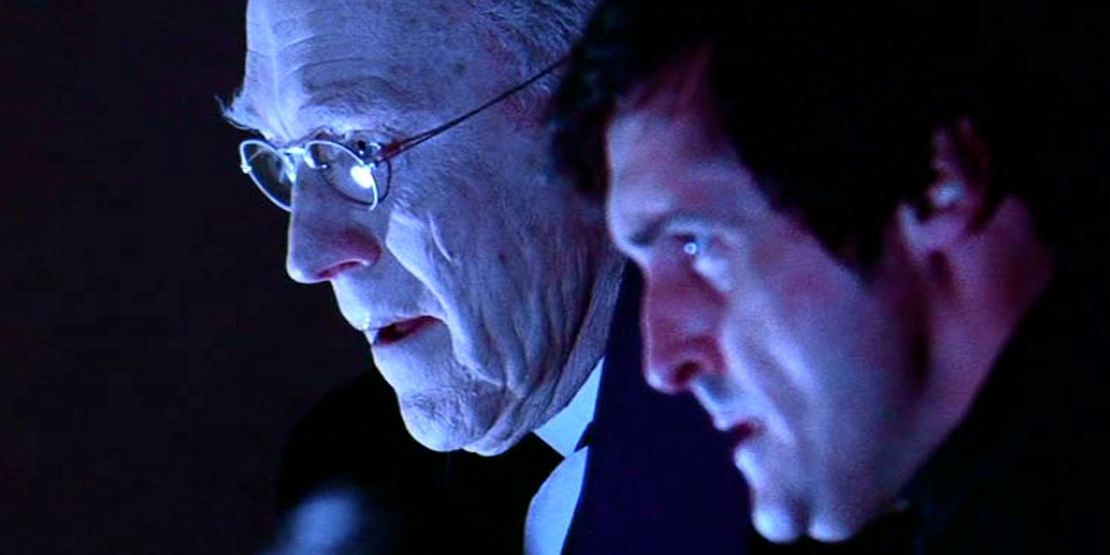
At its core, The Exorcist is not a film about the Devil. It is a film about faith. Father Karras, perhaps the film’s most complex character, embodies this crisis. A Jesuit priest and trained psychologist, he exists at the intersection of belief and doubt. He questions the existence of evil as a literal force. He questions his own vocation. He questions God. Regan’s possession becomes, for Karras, a test not of ritual, but of belief itself.
The film suggests that faith in the modern world is no longer inherited. It must be rediscovered, often through suffering. The exorcism is not simply a religious act. It is an existential confrontation. The film explores the struggle of faith and the nature of evil at a deeply human level. Karras does not defeat the demon through doctrine alone. He defeats it through sacrifice. In doing so, the film reframes faith not as certainty, but as action.
Evil in the Modern World
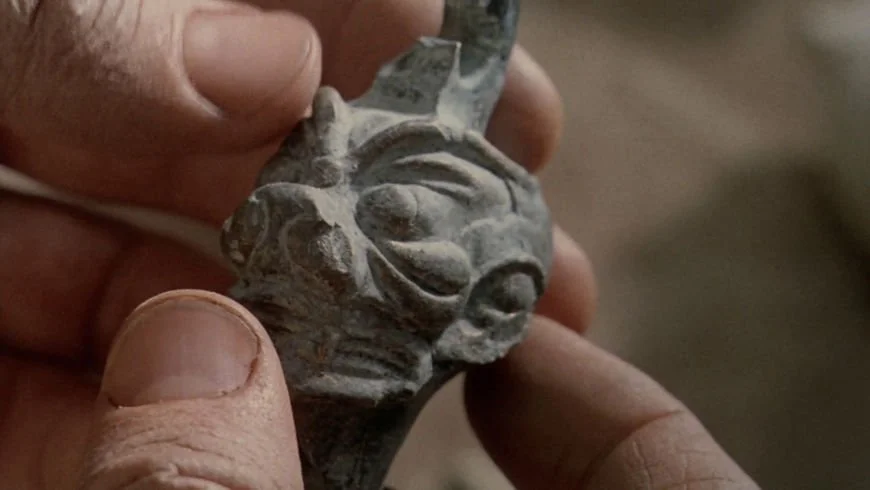
Perhaps the most unsettling aspect of The Exorcist is its portrayal of evil. The demon often identified as Pazuzu is not clearly defined in the narrative. It is not explained. It is not contextualised. It simply is. This absence of explanation is deliberate. The film resists the comforting logic of cause and effect. Evil is not the result of something. It is an intrusion. The film reflects the social anxieties of its time, the political instability, cultural upheaval, and moral uncertainty of the late 1960s and early 1970s.
In this reading, the demon becomes symbolic. Regan’s possession reflects a society that feels out of control, fragmented, and vulnerable. The stable structures of authority, family, religion, and science are all shown to be insufficient. The horror, then, is not just supernatural. It is cultural.
The Body as Battlefield
One of the most controversial elements of The Exorcist is its focus on the human body, particularly the body of a young girl. Regan’s transformation is physical, grotesque, and deeply unsettling. Her body becomes the site through which the demon expresses itself. This has led to extensive feminist and psychoanalytic interpretations.
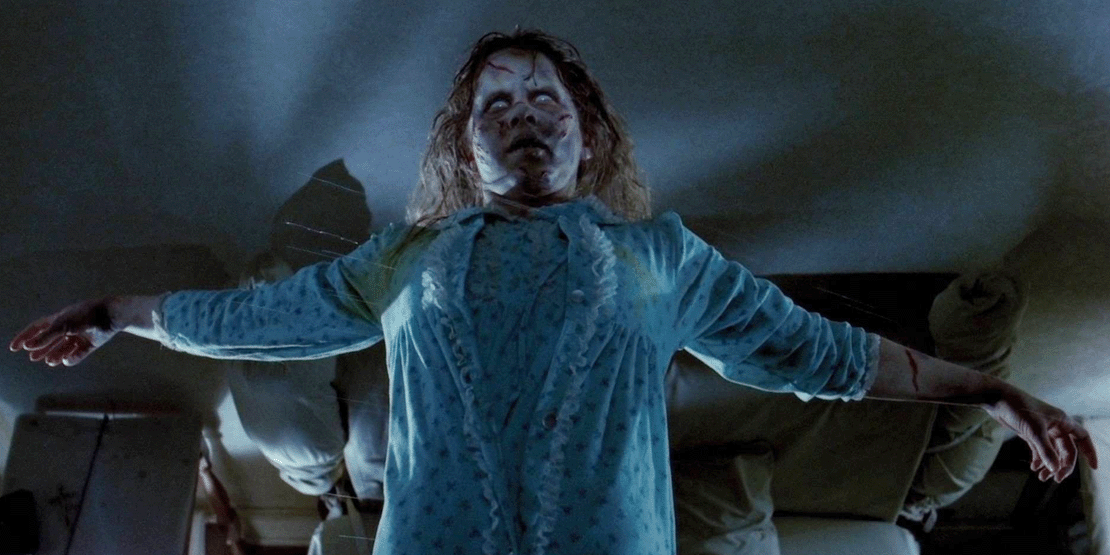
Some critics have argued that the film reflects a male anxiety surrounding female puberty, linking Regan’s possession to deeper fears of change and loss of control. Others have interpreted the film as a broader exploration of bodily autonomy and control. Regan’s body is no longer her own. It is invaded, manipulated, and displayed. This is where the film becomes truly disturbing. It is not simply about a demon entering a body. It is about the loss of self. The horror is not just what happens to Regan. It is what happens to identity itself.
The Mother: Love Against the Unknown
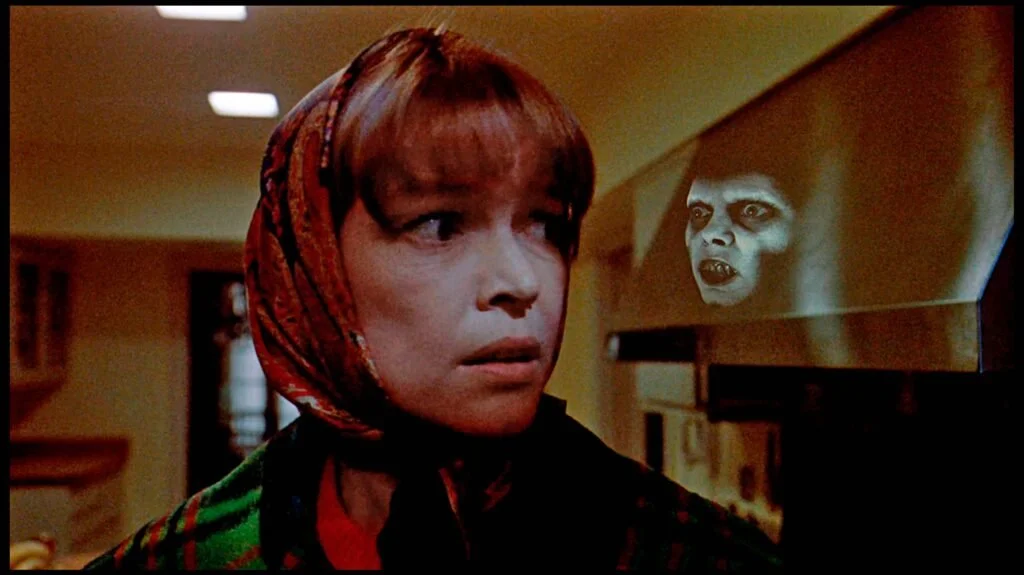
Chris MacNeil, Regan’s mother, is often overlooked in discussions of the film, yet she is its emotional core. A successful actress and single mother, Chris represents modern independence. She is rational, pragmatic, and initially dismissive of supernatural explanations. Her journey mirrors that of the audience. What makes her character so powerful is her helplessness. She cannot protect her child. She cannot understand what is happening. She can only witness.
In many ways, The Exorcist is a film about parental fear. The fear that something might happen to your child that you cannot prevent, cannot comprehend, and cannot fix. Chris’s eventual turn to the Church is not ideological. It is desperate. The film does not present faith as a choice. It presents it as a last resort.
Sound, Silence, and the Unseen
Much of The Exorcist’s power lies not in what it shows, but in what it suggests. The sound design is particularly significant. The use of silence, sudden noise, and unsettling audio textures creates an atmosphere of constant tension. The famous use of Tubular Bells is minimal yet unforgettable. The film also employs subliminal imagery, brief flashes, distorted faces, and almost imperceptible details that operate below conscious awareness. These techniques create a sense that something is always present, even when it is not visible. This aligns with the film’s central theme: the unseen. Evil is not always visible. It is felt.
Cultural Shock and Legacy
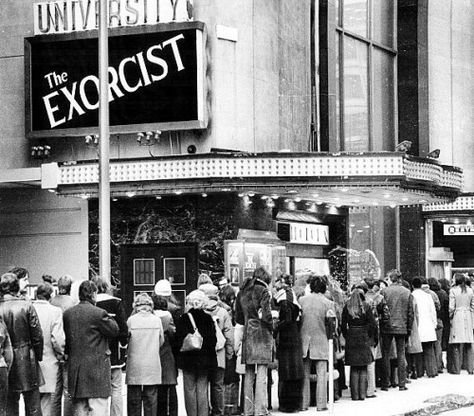
Upon its release, The Exorcist provoked unprecedented reactions. Reports of audiences fainting, vomiting, and fleeing cinemas became part of the film’s mythology. The reaction was not solely due to the film’s graphic content. It was due to its psychological intensity. The film blurred the line between fiction and reality, forcing audiences to confront the possibility, however remote, that what they were seeing could be real. The film’s cultural impact was immense. It reignited interest in exorcism, influenced countless horror films, and redefined the genre. More importantly, it demonstrated that horror could be serious. It could engage with philosophy, theology, and psychology. It could be art.
Religion, Modernity, and the Return of the Sacred
One of the most fascinating aspects of The Exorcist is its relationship with religion.
At a time when society was becoming increasingly secular, the film reintroduced the idea of the sacred not as comfort, but as necessity. The film reflects a tension between modern rationalism and older forms of belief. The Church in the film is not presented as perfect. It is slow, cautious, and uncertain. Yet it ultimately becomes the only institution capable of confronting the supernatural. This is not a simple endorsement of religion. It is a recognition of its persistence. The film suggests that even in a modern, scientific world, there are experiences that resist explanation. In those moments, older frameworks of meaning return.
The Exorcism: Ritual and Sacrifice
The final act of the film, the exorcism itself, is both brutal and ritualistic. It is not a clean, triumphant moment. It is chaotic, exhausting, and deeply physical. The priests are not heroic figures in the traditional sense. They are vulnerable, struggling, and ultimately sacrificial. Father Merrin represents unwavering faith. Father Karras represents doubt. Together, they form a complete response to the demonic. The climax of the film, Karras’s self-sacrifice, is crucial. It transforms the narrative from one of confrontation to one of redemption. Evil is not defeated through power. It is defeated through sacrifice.
A Film About the Human Condition
Ultimately, The Exorcist endures because it is not simply about possession. It is about fear.
It is about doubt. It is about the fragility of human understanding. The film confronts us with an unresolved question: What happens when everything we believe in fails? In this sense, The Exorcist is less a horror film than a philosophical work. It explores the limits of reason, the necessity of belief, and the enduring mystery of evil.
The Horror That Remains
More than fifty years after its release, The Exorcist remains one of the most powerful films ever made. Its horror is not confined to its images. It lingers in its ideas. It unsettles not because it shocks, but because it questions. In an age that often seeks certainty, The Exorcist reminds us of uncertainty. In a world that prioritises explanation, it reminds us of mystery. And in doing so, it achieves something rare: it makes us afraid not just of what we see, but of what we believe.
