Marianne Faithfull: A Life of Art, Survival, and Reinvention
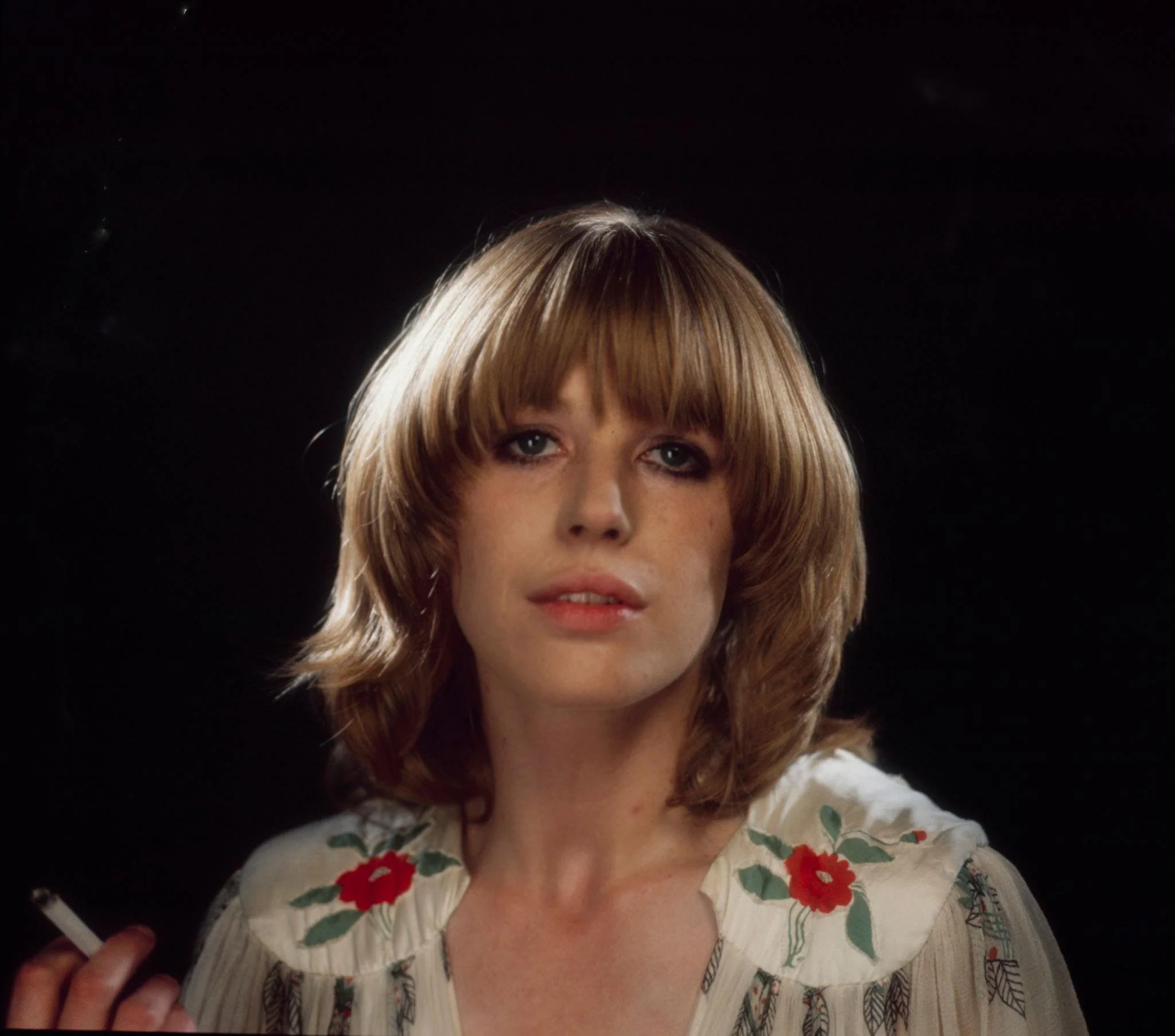
The death of Marianne Faithfull at the age of 78 marks the passing of one of the most singular voices of modern music. Few artists embodied the cultural turbulence of the late twentieth century with such honesty, vulnerability, and resilience. Faithfull was more than a singer who emerged from the London scene of the 1960s. She became a symbol of artistic reinvention, survival, and emotional truth, an artist whose life and work unfolded as one of the most remarkable narratives in popular music.
Born on December 29, 1946, in Hampstead, London, Faithfull entered the world already surrounded by an unusual mix of intellectual and artistic influences. Her mother, Eva von Sacher-Masoch, was an Austrian-Hungarian baroness and dancer with a deep connection to European culture.
Her father, Major Robert Glynn Faithfull, was a British intelligence officer and academic. From the beginning, Marianne’s upbringing combined aristocratic lineage with a bohemian sensibility. She attended Catholic schools and developed an early love for literature, poetry, and music. These influences would later become central to the emotional and literary quality of her songwriting.
Faithfull’s life changed dramatically in 1964 when she was discovered at a party by Andrew Loog Oldham, the ambitious manager of The Rolling Stones. Oldham quickly recognised something distinctive in the young singer. Within months, she recorded “As Tears Go By,” a delicate baroque pop ballad written by Mick Jagger and Keith Richards. The song became a major hit when Faithfull was only seventeen, launching her into the spotlight almost overnight.
The success of “As Tears Go By” established Faithfull as a central figure in the emerging London counterculture. With her ethereal voice, aristocratic poise, and enigmatic presence, she quickly became an icon of the Swinging London era. She appeared frequently in the press, moved within the same circles as the Rolling Stones, artists, filmmakers, and writers, and embodied the glamour and experimentation of the mid-sixties.
Yet Faithfull was never simply a decorative figure within the rock world. Even in these early years, she possessed an artistic sensibility that went beyond pop stardom. Her recordings blended folk, classical, and British pop influences in ways that hinted at a deeper emotional palette. At the same time, she began acting, appearing in theatre and film. Her performance in the cult film The Girl on a Motorcycle captured the spirit of the era’s sexual and psychological liberation, portraying a woman caught between freedom and longing.
During this period, Faithfull’s relationship with Mick Jagger made her one of the most visible figures of the rock and roll world. Their romance unfolded in public view, placing her at the centre of the cultural mythology surrounding the Rolling Stones. But the attention also carried a darker side. As the 1960s came to a close, Faithfull faced a series of personal crises that would dramatically alter the course of her life.
The late sixties and early seventies became a period of collapse and exile. Faithfull struggled with addiction, homelessness, and the loss of her recording contract. For a time, she lived on the streets of Soho, largely forgotten by the music industry that had once celebrated her. Many artists would have disappeared permanently under such circumstances. For Faithfull, however, this descent would ultimately become the foundation for one of the most extraordinary comebacks in modern music.
That comeback arrived in 1979 with the release of the landmark album Broken English. The record represented a complete artistic transformation. Gone was the delicate folk pop voice of the 1960s. Years of hardship had reshaped Faithfull’s voice into something deeper, rougher, and far more expressive. Her vocals carried the scars of experience, giving the songs an intensity rarely heard in popular music.
Broken English fused punk energy, electronic textures, and literary songwriting into a work that felt urgent and contemporary. The album confronted themes of alienation, political violence, addiction, and identity with unflinching honesty. Tracks such as “The Ballad of Lucy Jordan” and “Why D’Ya Do It?” revealed a songwriter unafraid to confront the darker corners of the human psyche.
Critics and audiences immediately recognised the album as a masterpiece. It received a Grammy nomination and established Faithfull not merely as a survivor but as one of the most compelling voices in contemporary music. Broken English did not simply revive her career. It redefined it.
From that point forward, Faithfull became a uniquely respected figure in the arts. Unlike many artists whose careers are tied to a single era, she continued to evolve over the following decades. Her later albums explored jazz, cabaret, experimental rock, and spoken word performance, often collaborating with a wide range of musicians and producers.
Throughout the 1980s, 1990s, and 2000s, she worked with artists such as Nick Cave, PJ Harvey, Lou Reed, and Warren Ellis. These collaborations revealed the depth of respect she commanded among musicians across generations. To many younger artists, Faithfull represented a model of artistic integrity and fearless expression.
Her work extended far beyond music. Faithfull remained active in film and theatre, appearing in productions such as Irina Palm and continuing to explore dramatic performance. She also wrote memoirs and poetry, reflecting on her life with candour and wit. Her autobiography Faithfull offered readers a rare glimpse into the cultural upheavals of the 1960s and the personal costs that often accompanied that era’s freedoms.
Faithfull’s artistic identity was inseparable from her willingness to confront vulnerability. Unlike many performers who attempt to preserve a carefully constructed image, she allowed her life to remain visible in her art. Addiction, illness, love, loss, and survival all became part of the emotional landscape of her music.
In later years, her voice acquired an almost spoken quality, somewhere between song and narration. What might once have been considered limitations became artistic strengths. Her performances carried the weight of experience, turning each song into something closer to storytelling than conventional pop singing.
This ability to transform adversity into artistic power is perhaps the defining feature of Faithfull’s legacy. She showed that music could hold complexity, contradiction, and emotional depth without losing its capacity to move listeners.
For audiences who discovered her during the 1960s, Faithfull remained a symbol of that era’s beauty and rebellion. For younger listeners, she became something else entirely: a figure of endurance, an artist who refused to disappear even after the industry that created her had moved on.
In this sense, her career reflects a broader truth about artistic survival. The music industry often celebrates youth, novelty, and immediate success. Yet the most enduring artists are often those who continue to evolve long after the spotlight fades.
Marianne Faithfull belonged firmly in that category.
Her work reminds us that great art does not arise only from triumph. It often emerges from struggle, reinvention, and the willingness to confront one’s own history with honesty.
With her passing, the world loses not just a remarkable musician but a cultural witness to more than half a century of artistic change. From the hopeful optimism of the 1960s to the darker introspection of the late twentieth century, Faithfull’s voice accompanied many of the defining shifts in modern music.
Yet the legacy she leaves behind is not confined to nostalgia. Her recordings continue to resonate because they speak to universal human experiences: longing, resilience, transformation, and the search for meaning in a chaotic world.
Artists come and go, but a few leave behind something more enduring than fame. They leave a body of work that continues to speak long after they are gone.
Marianne Faithfull was one of those artists.
Her voice, weathered and unmistakable, will continue to echo through the history of music.