Glass: a portrait of Philip in twelve parts
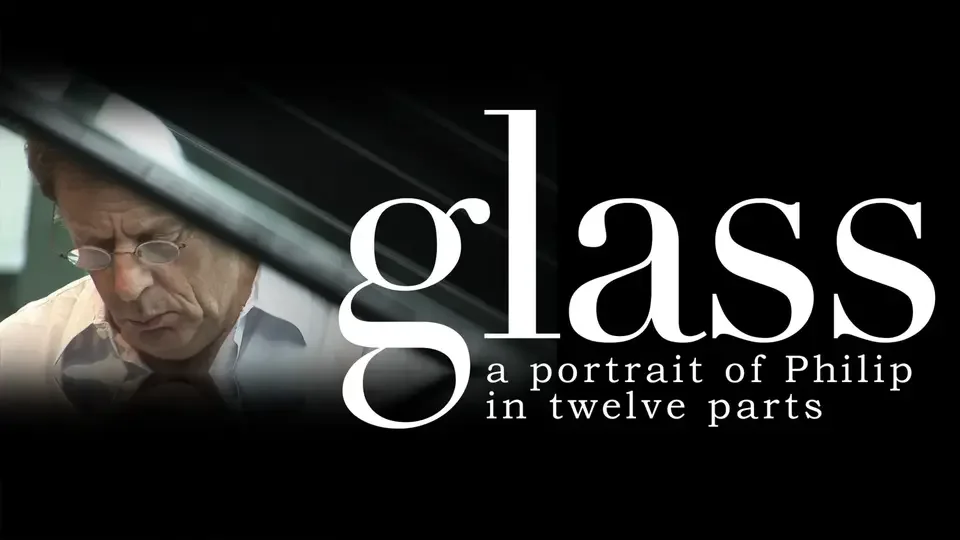
Philip Glass: A Portrait in Twelve Parts is an intimate and reflective documentary that explores the life, work, and philosophy of one of the most influential composers of the modern era, Philip Glass. Rather than presenting a straightforward biography, the film unfolds as a series of loosely connected chapters mirroring Glass’s own musical style, built on repetition, variation, and gradual transformation.
The documentary follows Glass in his seventies, offering a portrait of an artist still actively creating, performing, and evolving. It presents a man deeply committed to his craft, not as a figure of the past but as a living, working composer engaged with the present moment.
The film is divided into twelve sections, each capturing different aspects of Glass’s life. These include rehearsals, performances, travel, family moments, and quiet reflection. Rather than explaining his music, the documentary embodies it. Scenes often unfold slowly with minimal narration, allowing viewers to experience time in a way that echoes Glass’s compositions.
This structure reflects a key idea that art is not something separate from life, but something lived continuously.
A recurring theme is Glass’s extraordinary discipline. Despite his global reputation, he is shown working tirelessly, rehearsing with musicians, composing new pieces, and revisiting older works.
The film highlights a central truth about creativity: great art is not just inspiration but persistence. Glass treats composition as daily practice rather than occasional brilliance, reinforcing the idea that artistic mastery comes from sustained effort over decades.
Glass’s work is deeply influenced by philosophy and spirituality, particularly his studies in India and his engagement with Tibetan Buddhism. The documentary suggests that his music is not only technical but meditative, concerned with time perception and consciousness.
His collaborations across disciplines, from film to opera, also demonstrate his belief in art as a shared, evolving process rather than a fixed object.
Rather than analysing his compositions in technical terms, the film allows the music to speak for itself. Repetitive structures, shifting rhythms, and evolving patterns create a hypnotic effect, encouraging the viewer to listen differently.
Glass’s music becomes less about melody in the traditional sense and more about immersion, inviting the audience into a state of heightened awareness.
One of the film’s most striking insights is that Glass does not see himself as finished. Even in later life, he continues to experiment, collaborate, and push forward.
This challenges the common narrative of artistic legacy. Instead of looking back, Glass remains oriented toward the future. The documentary presents creativity as a lifelong process, one that does not conclude but continually unfolds.
For a platform like The Deep Dive Society, this documentary embodies everything you stand for
Slow attentive engagement with art. The importance of discipline and craft. The relationship between art philosophy and life. A rejection of surface-level consumption. In an age of speed and distraction, Philip Glass: A Portrait in Twelve Parts offers something rare: time to observe, listen, and think deeply.
The film ultimately suggests that to understand an artist like Philip Glass, you cannot rush. His work asks for patience, repetition, and openness. In doing so, it reminds us that true understanding is not immediate; it is something that unfolds over time.
Watch the full documentary below.