Record Safari Documentary Review: Exploring Vinyl Culture in the Streaming Era
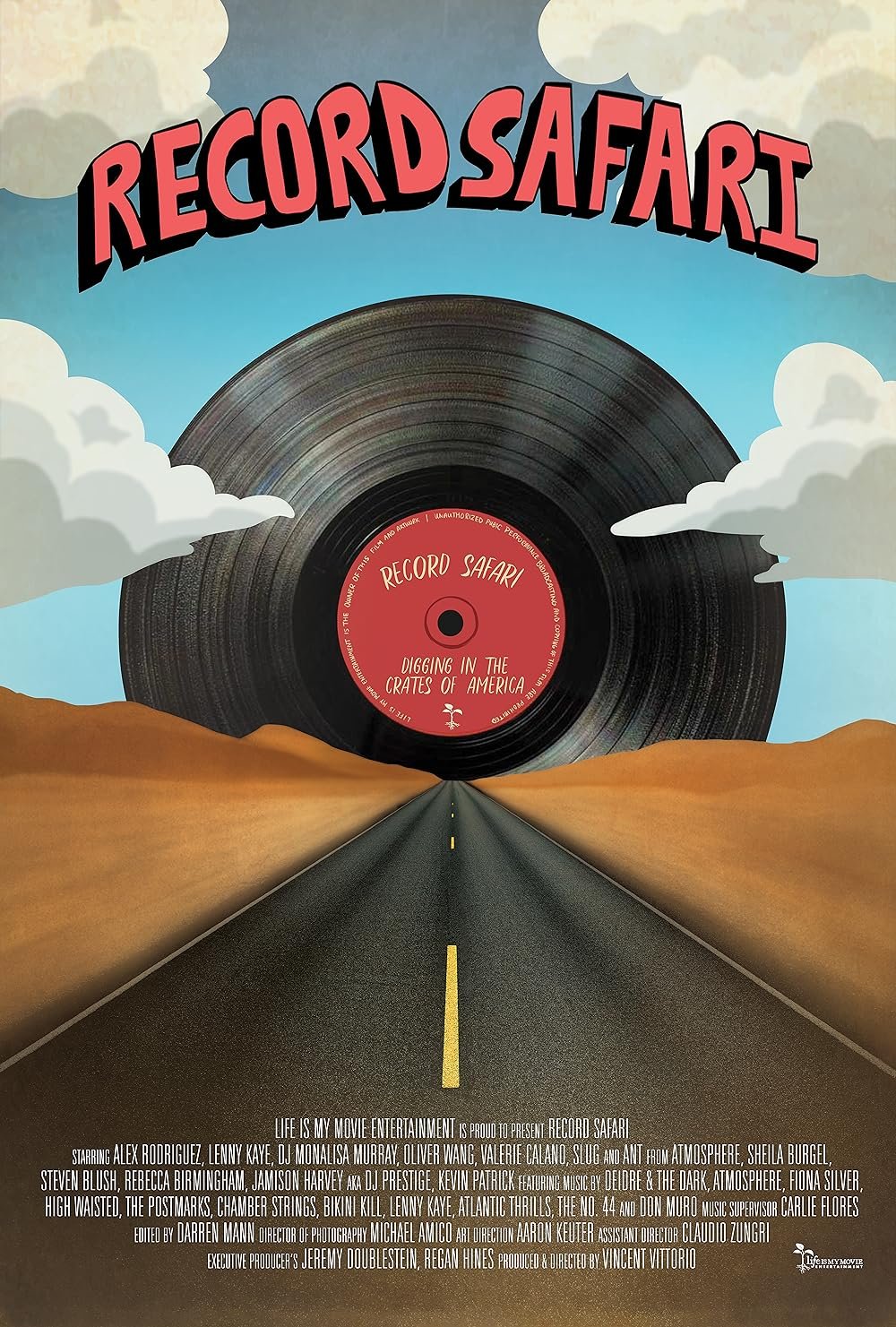
Record Safari, directed by Vincent Vittorio, is far more than a documentary about vinyl records. It is an excavation of a cultural instinct, an attempt to understand why, in an era defined by frictionless streaming and infinite access, people still feel compelled to search, hold, and preserve physical sound.
At its centre is Alex Rodriguez, a lifelong record collector whose passion borders on the devotional. The film follows his journey across the United States as he curates a selection of records for the Coachella Music Festival’s on-site record store. But this is not simply a logistical mission. It is a pilgrimage. Each stop along the way, dusty record shops, private collections, forgotten corners of musical history, becomes a site of rediscovery, where music is not consumed but uncovered.
Rodriguez is a compelling guide because he embodies something increasingly rare: a relationship with music built on patience, curiosity, and physical engagement. His enthusiasm is not performative; it is lived. As he flips through crates, negotiates prices, and shares stories with fellow collectors, we begin to understand that vinyl culture is not about ownership in the conventional sense. It is about the connection between listener and object, past and present, memory and sound.
The documentary’s strength lies in how it situates this personal journey within a broader cultural conversation. Interviews with figures such as Pete Rock, Lenny Kaye, and members of Atmosphere deepen the film’s intellectual and emotional scope. These voices articulate what collectors often struggle to put into words: that vinyl is not merely a format, but a way of listening. It demands attention. It resists distraction. It restores music to something closer to ritual.
In one sense, Record Safari is about nostalgia, the tactile pleasure of album artwork, the warmth of analogue sound, the slow, deliberate act of placing a needle on a record. But the film resists reducing vinyl’s resurgence to sentimentality. Instead, it frames it as a response to something lacking in contemporary culture. In a digital ecosystem defined by abundance, speed, and disposability, vinyl offers scarcity, slowness, and permanence. It asks more of the listener, and in return, gives more back.
Visually, the film reinforces this philosophy. Cinematographer Michael Amico captures record stores and collections with an almost archival sensitivity lingering on textures, colours, and the quiet intimacy of browsing. There is a warmth to the imagery that mirrors the subject’s analogue ethos. Editor Darren Mann maintains a rhythm that feels organic rather than imposed, allowing conversations and discoveries to breathe. The pacing reflects the culture it documents: unhurried, attentive, immersive.
Music, naturally, plays a central role not just as content, but as atmosphere. The film’s soundtrack, drawn from a range of artists and genres, underscores the diversity of vinyl culture while reinforcing its unifying principle: that music is something to be experienced, not merely accessed.
What ultimately makes Record Safari resonate is its understanding that vinyl collecting is not about resisting the future, but about preserving a certain kind of relationship with art. It is about reclaiming attention in an age of distraction, meaning in an age of excess, and presence in an age of constant digital drift.
In this sense, the film becomes quietly philosophical. It asks: What does it mean to listen truly? What is lost when music becomes invisible, intangible, endlessly available but rarely engaged with in depth? And why, despite every technological advance, do we still return to objects to records, sleeves, liner notes as if they contain something the digital world cannot replicate? Record Safari does not offer definitive answers. Instead, it offers something more valuable: a way of seeing, and perhaps more importantly, a way of listening.
For seasoned collectors, the film will feel like recognition, a mirror held up to a deeply personal passion. For newcomers, it serves as an invitation into a slower, richer relationship with music. And for anyone navigating the overwhelming abundance of modern media, it serves as a reminder that sometimes the most meaningful experiences are those that cannot be rushed.
In the end, Record Safari is not just about vinyl. It is about the enduring human need to find meaning in the act of searching and the quiet joy of finally placing the needle down.
Watch the full documentary below
