Thom Yorke The Eraser Review: Meaning, Themes, Politics and Identity Analysis
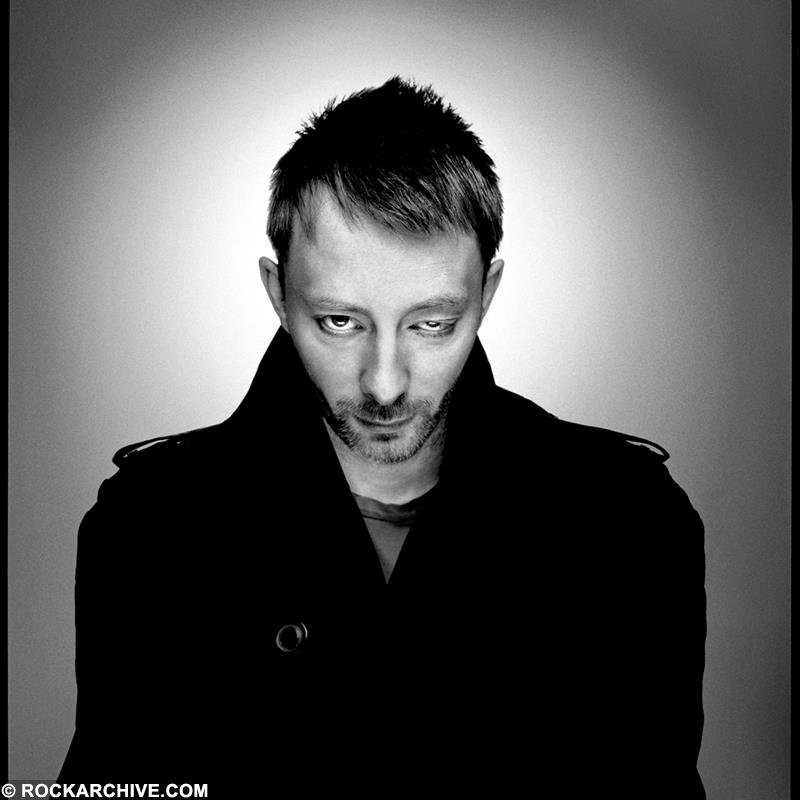
In 2006, at a moment when the cultural atmosphere felt increasingly unstable politically, environmentally, and psychologically, Thom Yorke released The Eraser, his first official solo album. It arrived quietly, without the spectacle that typically surrounds a figure of Yorke’s stature, and yet it carried with it an unusual weight. This was not merely a side project or a creative detour. It was something more intimate and more unsettling, a record that seemed to emerge from a space of isolation, as though it had been assembled in the margins of a world growing louder, faster, and less comprehensible by the day.
What makes The Eraser endure is not simply its sound, nor even its themes, but the way in which it captures a particular feeling, one that has only intensified in the years since its release. It is the feeling of being slowly overwritten, of living within systems that obscure as much as they reveal, and of trying, in some fragile way, to hold onto a sense of self within that process.
The first thing that distinguishes The Eraser from Yorke’s work with Radiohead is its scale. Where Radiohead albums often feel architectural, layered, expansive, and meticulously constructed, this record feels deliberately constrained. It is built from loops, fragments, and repetitions, glitchy beats that stutter rather than drive forward, basslines that pulse with mechanical insistence, and piano motifs that seem to circle themselves rather than resolve.
There is a sparseness here that is not emptiness but tension. Each sound appears carefully placed, as though too much density would collapse the fragile equilibrium the album maintains. The production, shaped in collaboration with Nigel Godrich, resists grandeur. Instead, it leans into restraint, allowing space to become an active element of the music.
Within this space, Yorke’s voice takes on a different character. It is less obscured than it often is in Radiohead’s work, more exposed, but also more detached. It hovers above the instrumentation rather than embedding itself within it, like a signal transmitted from a distance. The effect is disquieting. The human presence is there, but it feels precarious, as though it could dissolve at any moment into the surrounding circuitry.
This tension between the organic and the mechanical, between voice and system, is central to the album’s aesthetic. The music does not simply incorporate electronic elements. It stages a confrontation between human expression and technological mediation. Listening to The Eraser is to inhabit that confrontation.
The title of the album offers a key to its underlying logic. The eraser is not just an image, it is a process. It suggests removal, revision, disappearance, the deliberate or unconscious act of wiping something away. Across the album, this idea manifests in multiple forms, each reinforcing the others.
On a political level, the songs evoke a world in which truth is unstable and easily manipulated. Harrowdown Hill, perhaps the album’s most explicitly referential track, draws on the death of government scientist David Kelly, a figure whose story became entangled in the controversies surrounding the Iraq War. Yet the song does not function as straightforward commentary. Instead, it captures the atmosphere of quiet erasure that surrounds such events, the sense that facts can be obscured not only through lies, but through silence, ambiguity, and omission.
This political dimension intersects with a broader environmental anxiety that runs through the album. The artwork, created by longtime collaborator Stanley Donwood, depicts a submerged London, recalling both mythic imagery and contemporary fears of climate collapse. Water appears throughout the record as a kind of elemental force, rising, encroaching, indifferent to human attempts at control. It is less a metaphor than a condition, the background against which everything else unfolds.
At the same time, the album turns inward, exploring the erosion of identity itself. The title track articulates this most clearly, presenting a paradox in which attempts at erasure only intensify presence. The more one tries to disappear, the more fragmented and multiplied the self becomes. This is not the dissolution of identity, but its distortion, a theme that resonates strongly within a digital culture where individuals are constantly mediated, replicated, and reinterpreted.
Taken together, these strands form a coherent vision. Erasure is not an isolated act. It is a systemic condition. It operates at the level of politics, environment, and psyche, shaping how reality is constructed and experienced.
One of the most striking features of The Eraser is its relationship to time. Unlike many albums that move through clear arcs of tension and release, this record often feels suspended. Tracks loop rather than progress, circling around motifs that never fully resolve.
The Clock exemplifies this dynamic. Built around a repetitive rhythmic pattern, it creates the sensation of time passing without movement. There is no forward momentum, only accumulation. The listener is drawn into a kind of temporal stasis, where each moment resembles the last, and change becomes almost imperceptible.
This approach extends across the album. Even in tracks that introduce variation, such as Black Swan or Analyse, the underlying structures remain cyclical. The music resists narrative development, opting instead for persistence. It continues rather than evolves.
This has a profound psychological effect. The absence of resolution generates a low level tension that never quite dissipates. It mirrors a contemporary experience of time as something that is constantly filled yet rarely meaningful, where activity replaces progression and repetition replaces transformation.
Despite its pervasive unease, The Eraser is not without moments of emotional clarity. Analyse, inspired by a power outage that plunged a city into temporary darkness, offers one of the album’s most direct statements. Its refrain captures a paradox at the heart of modern life. The conditions that most require reflection are precisely those that make reflection impossible.
And It Rained All Night transforms environmental anxiety into sound, its dense, immersive textures evoking a world overwhelmed by forces beyond its control. The track’s relentless quality conveys not only the physical reality of flooding, but also its psychological impact, the sense of being enveloped, unable to escape.
The closing track, Cymbal Rush, provides a different kind of resolution. Stripped back and melancholic, it allows a rare moment of stillness. The tension does not disappear, but it softens. The machinery recedes, and what remains is something closer to vulnerability. It is not catharsis, but it is a kind of quiet acknowledgement.
In retrospect, what is most remarkable about The Eraser is how accurately it anticipated the trajectory of the years that followed. Its concerns, political obfuscation, environmental crisis, the fragmentation of identity in a mediated world, have only become more pronounced. What might have seemed abstract or exaggerated in 2006 now feels immediate, even obvious.
Yet the album does not present these themes in a didactic way. It does not argue or explain. Instead, it embodies them. Its structures, its textures, its silences all participate in the same logic of uncertainty and instability. Listening to the record is not an act of interpretation alone. It is an experience of the conditions it describes.
This is where its power lies. The Eraser does not stand apart from its subject matter. It immerses the listener within it, creating a space in which the boundaries between sound and meaning begin to blur.
It is tempting to read The Eraser primarily in relation to Radiohead, to see it as either an extension or a deviation from the band’s work. While such comparisons are inevitable, they risk missing what is most distinctive about the album.
Freed from the collaborative dynamics of the band, Yorke does not expand outward but contracts inward. The music becomes more focused, more minimal, more exposed. What emerges is not a diminished version of Radiohead’s sound, but a distilled one, stripped of its excess, reduced to its most essential elements.
This process of reduction mirrors the album’s thematic concerns. Just as the music pares itself back, the world it depicts seems to be losing substance, becoming thinner, more fragile. The form and the content reinforce each other, creating a unified aesthetic.
Nearly two decades after its release, The Eraser remains a quietly unsettling work. It does not demand attention in the way more overtly dramatic albums might, but it lingers. Its moods seep into the listener, its repetitions echo long after the music has stopped.
In the context of The Deep Dive Society’s broader concerns, the defence of art as a space of depth, reflection, and resistance, this album occupies a significant place. It refuses the immediacy and disposability that characterize much contemporary culture. It asks for patience, for attention, for a willingness to sit with discomfort.
More importantly, it offers no easy answers. It does not resolve the tensions it presents, nor does it provide a clear path forward. Instead, it insists on the importance of remaining within the question, of resisting the impulse to erase complexity in favour of simplicity.
In this sense, The Eraser is not just an album about disappearance. It is an argument against it. It preserves, within its fragile structures, a space for uncertainty, for ambiguity, for thought itself.
And in a world increasingly defined by the speed and efficiency of erasure, that preservation feels not only valuable, but necessary.
