The Quiet Tyranny of Self-Optimization: Rereading Byung-Chul Han’s The Burnout Society
In the early years of the 21st century, as smartphones multiplied and workplaces dissolved into the cloud, a new kind of fatigue began spreading across affluent societies. It was not the old tiredness brought about by physical labour or external coercion. It was a more spectral form of exhaustion, one that seemed to seep from within. Depression rates rose, attention spans contracted, and the contemporary subject found itself oscillating between anxiety and apathy without quite understanding why.
Into this landscape stepped the Korean German philosopher Byung-Chul Han with a slim volume that made a decisive claim: what we call burnout is not merely a personal failure or a managerial problem. It is, he argues, the signature malady of a social order that has quietly reengineered the human being from a disciplined subject into an endlessly self-driven project.
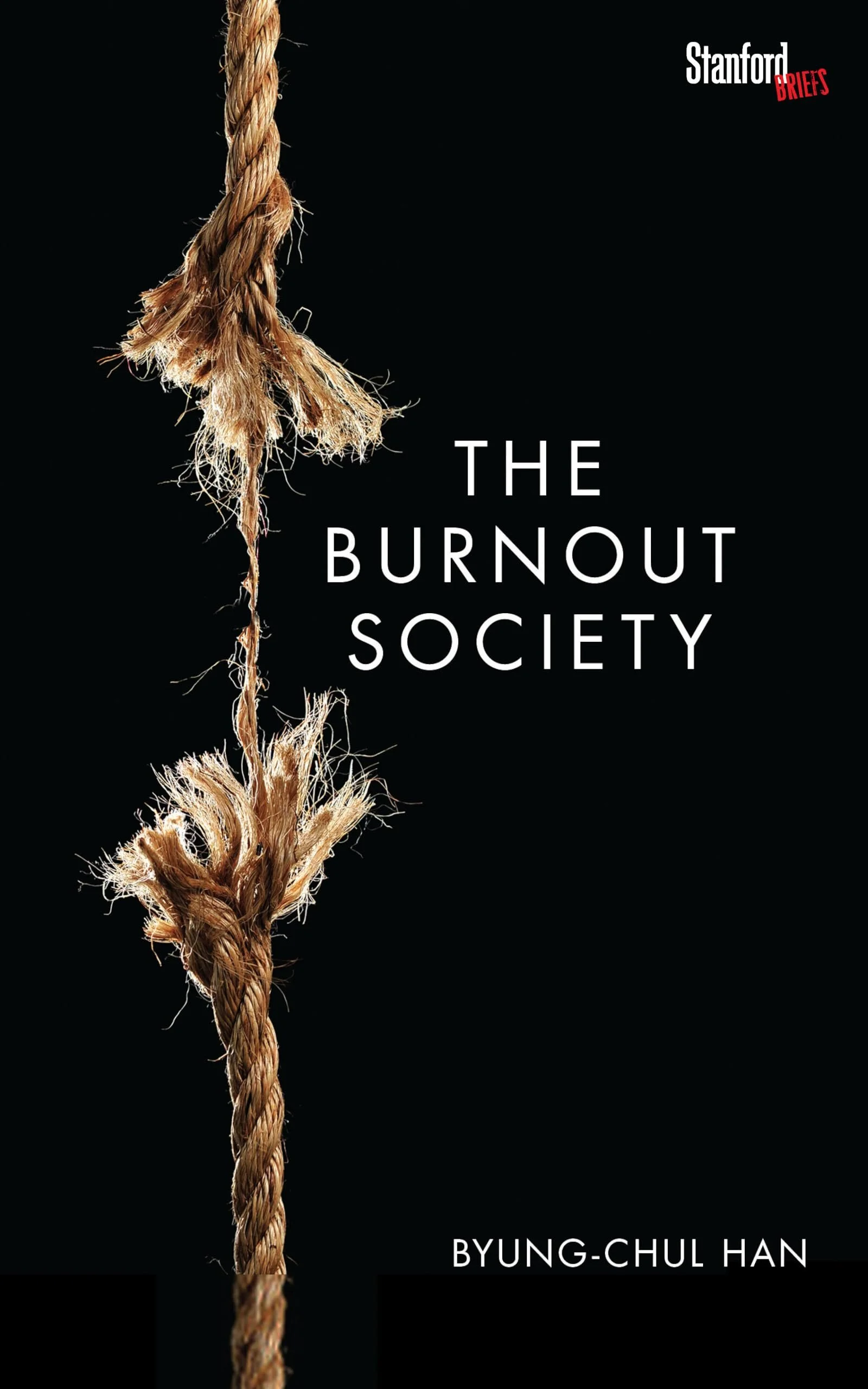
The Burnout Society is not a long book, but it is a dense one. Its analysis unfolds with the kind of calm, aphoristic precision that has become Han’s trademark. At its core is a simple observation: the neoliberal age has replaced the command of authority with the seduction of possibility. We no longer hear “You must.” Instead, we are encouraged by a thousand soft voices saying “You can.”
What appears, from a distance, like liberation is in Han’s view a deeper form of domination. External constraints have been replaced with internal imperatives. The individual is asked not only to perform but to perform willingly. The modern subject becomes an entrepreneur of the self, ceaselessly optimizing its abilities, relationships, emotions, and even leisure. Work binds itself to identity. Achievement becomes not an activity but an existential posture. Under such conditions, burnout becomes not an aberration but an inevitability.
Han contrasts this “achievement society” with the earlier disciplinary societies described by Michel Foucault. Where Foucault saw prisons, asylums, barracks, and factories as the central institutions of modern power, Han sees them as giving way to a new architecture of influence. Today’s tools of control are not enclosed spaces but open platforms, networks, and interfaces. They do not restrict action. They multiply it. They encourage participation, creativity, communication, flexibility. This, Han argues, is what makes them so effective. One does not rebel against what one believes one has chosen.
This is why Han describes contemporary fatigue as a result of “the violence of positivity.” In a world saturated with injunctions to connect, improve, and enjoy, there is no room for refusal. Negativity which once imposed limits gains a paradoxical value in Han’s thought. To say no, or simply to withdraw, becomes a gesture of resistance. Yet such gestures are increasingly difficult to sustain within a culture that treats inactivity as laziness and contemplation as inefficiency.
Han directs particular attention to the crisis of attention that defines the digital age. Long before the term “doomscrolling” entered common speech, he observed a growing shift from deep attention to what he calls hyperattention a scattered, reactive, overstimulated state in which consciousness darts rapidly between stimuli without settling. For Han, this is not just a cognitive shift but a cultural one. A society built upon acceleration does not reward slowness, patience, or the capacity to dwell with complexity. Without these capacities, the groundwork for meaning erodes. The mind becomes overlit and undernourished.
One of Han’s more haunting themes is the disappearance of the Other. Genuine encounter, he argues, requires distance as well as difference. It involves a moment of pause, of openness, in which one is willing to be unsettled. Contemporary culture, shaped by algorithms that tailor our feeds and by social platforms that reward instant affirmation, tends to dissolve alterity. Everything becomes familiar, predictable, frictionless. The world is curated to resemble the self. The cost is a thinning of experience and an expansion of loneliness.
Critics sometimes fault Han for offering diagnosis without cure. He does not propose programmes for reform. He does not believe that burnout can be solved through better wellness routines or corporate incentives. For Han, such efforts only reinforce the logic of optimization they seek to resist. His counter-proposal is far more quietly radical. He gestures towards a revival of practices that have become endangered: lingering, leisure, contemplation, genuine boredom, and the capacity to be present without purpose. These are not solutions that can be packaged. They are forms of life that must be cultivated against the grain of the prevailing order.
What gives The Burnout Society its enduring resonance is not only its conceptual clarity but its affective accuracy. Han articulates something many people intuit but cannot name. The disquiet that accompanies freedom. The exhaustion that shadows choice. The strange sense of being both empowered and depleted. He reminds us that a world organised around unlimited possibility may paradoxically shrink our capacity to live fully.
More than a decade after its publication, Han’s analysis seems even more prescient. The technologies that once promised liberation now weave ever more tightly into the intimate rhythms of daily life. The culture of self-branding has expanded far beyond the workplace. Even rest risks becoming an item on the productivity ledger. In such a landscape, Han’s call to reclaim negativity to rediscover the value of not doing reverberates with unusual force.
The Burnout Society does not tell us how to heal. But it tells us, with rare clarity, what ails us. In doing so, it invites a reconsideration of what it means to be free, what it means to be human, and what forms of life might resist the quiet tyranny of self-optimization.
By Jake James Beach
Founder - The Deep Dive Society
If you’ve enjoyed this exploration, we’d love to welcome you back to the Deepdive Society. Subscribe to our newsletter and follow us on social media to stay connected, join the conversation and help build a community dedicated to curiosity, reflection and the art of looking deeper. Together, we can shape a society committed to the Deep dive mission.