Nirvana (1960s Band): The Forgotten Psychedelic Pop Pioneers Behind The Story of Simon Simopath.
When you hear the name Nirvana, the first thought that comes to mind is usually the iconic 90s grunge band led by Kurt Cobain, not a 6os band from London, England, which was forgotten over time.
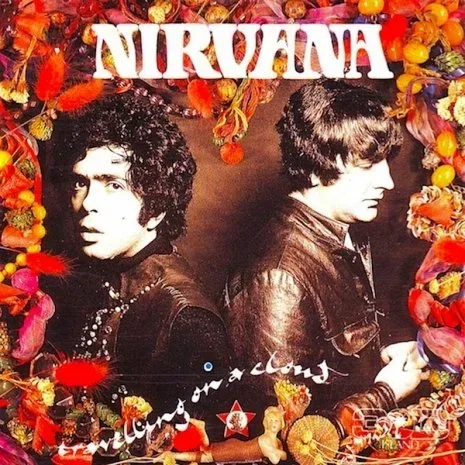
Nirvana was established in London in 1966 as the performance side of a songwriting collaboration between Irish musician Patrick Campbell-Lyons, Greek composer Alex Spyropoulos and English producer Ray Singer. Campbell-Lyons, Ray Singer, and Spyropoulos provided all the vocals for their recordings. Campbell-Lyons played guitar, while Spyropoulos contributed on some keyboards. Musically, Campbell-Lyons and Spyropoulos blended elements of rock, pop, folk, jazz, Latin rhythms, and classical music, with baroque chamber-style arrangements. Their music has often been labelled progressive rock, psychedelic rock, or pop rock.
In October 1967, Nirvana released their debut album titled The Story of Simon Simopath, produced by legendary producer and Island Records founder Chris Blackwell. The album is regarded as one of the earliest narrative concept albums, predating other story-focused concept albums such as The Pretty Things' S.F. Sorrow (December 1968), The Who's Tommy (April 1969), and The Kinks' Arthur (September 1969). In 1968, Nirvana released their second album, All of Us, showcasing a diverse range of musical styles. After its release, Ray Singer left to produce for Peter Sarstedt.
Their third album, Black Flower, was rejected by Blackwell, who compared it unfavourably to Francis Lai's A Man and a Woman. It was later released in the UK as To Markos III in May 1970, although only about 250 copies were pressed before it was deleted. One track, "Christopher Lucifer," criticised Blackwell. The duo split in 1971, with Campbell-Lyons becoming the main contributor to the next two albums: Local Anaesthetic (1971) and Songs of Love and Praise (1972), the latter featuring Sylvia Schuster. Campbell-Lyons then pursued a solo career, releasing albums such as Me and My Friend (1973), The Electric Plough (1981), and The Hero I Might Have Been (1983). Nirvana reunited in 1985, touring Europe and releasing a compilation album titled Black Flower (Bam-Caruso, 1987).
In the 1990s, they produced two more albums, Secret Theatre (1994) and Orange and Blue (1996), featuring previously unreleased material, including a flower-power cover of "Lithium," originally by the Seattle grunge band Nirvana. This cover was meant for a humorous project called Nirvana Sings Nirvana, which was abandoned after Kurt Cobain's death. In 1992, the original band filed a lawsuit against the Seattle band, which was settled out of court, allowing both to use the name "Nirvana" without distinctions. In 1999, they released a three-disc anthology titled Chemistry, followed by reissues of their first three albums in 2003. In 2005, Local Anaesthetic and Songs of Love and Praise were reissued in Japan. In 2018, they released Rainbow Chaser: The 60s Recordings (The Island Years), a double CD featuring 52 tracks, including 27 previously unreleased songs.
Though they may have been overshadowed by the popularity of 90s Nirvana, the band are still remembered by those who acknowledge their importance. They were a Band whose music was rooted in a style of melodic pop-rock with baroque influences, reminiscent of the Beach Boys on their albums Pet Sounds and God Only Knows, as well as the Zombies with Odyssey and Oracle and their classic "Time of the Season. A band that was the first to create a concept album. For these reasons alone, they rightfully have a place in the history of music.