The Dead Weather: Career, Discography, and the Dark Blues Rock Legacy of Jack White’s Supergroup
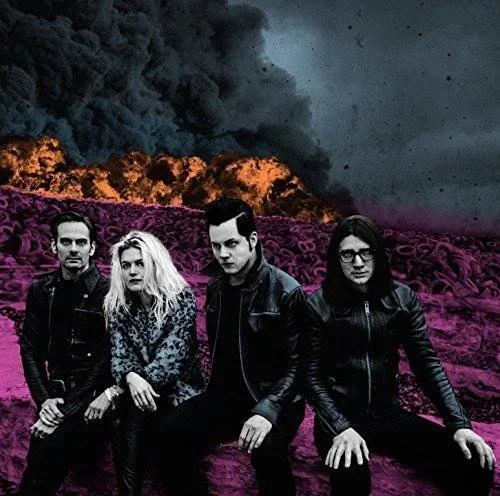
In the late 2000s, when the revival of garage rock was already reshaping alternative music, a new band emerged that seemed almost mythic in its formation. The Dead Weather arrived not as a conventional band but as a meeting of powerful musical personalities whose combined chemistry produced one of the most distinctive rock projects of the era.
Formed in 2009 in Nashville, Tennessee, The Dead Weather brought together four musicians already deeply embedded in the alternative rock landscape: Jack White of The White Stripes and The Raconteurs, Alison Mosshart of The Kills, Dean Fertita of Queens of the Stone Age, and Jack Lawrence of The Greenhornes.
Rather than forming around a calculated concept, The Dead Weather came into existence through accident, improvisation, and creative instinct.
Their music would reflect that same spirit. Dark, heavy, and hypnotic, their sound fused blues rock, garage rock, psychedelic textures, and experimental production into something raw and volatile. At the centre of it all was the commanding presence of Alison Mosshart, whose fierce vocals provided the group’s emotional and sonic core.
A Supergroup Born by Accident
The origins of The Dead Weather can be traced back to a moment of vulnerability. During a tour with The Raconteurs, Jack White lost his voice. Unable to sing his own material, he turned to Alison Mosshart, who happened to be touring with the band.
Mosshart stepped in to perform several songs, including “Steady as She Goes” and “Salute Your Solution.” Her performance left a lasting impression. White realised that her powerful, feral vocal style opened possibilities that his own songwriting had not yet explored.
Soon after, White invited Mosshart and bassist Jack Lawrence to collaborate on new material. When they entered the studio, they were joined by Dean Fertita, whose multi-instrumental talents added further depth to the project.
The chemistry between the four musicians was immediate.
In January 2009, they gathered at Third Man Records in Nashville for what began as a casual jam session. Within days, the group found themselves writing and recording at a remarkable pace. According to White, the band worked without overthinking the process. Songs emerged spontaneously, and were often recorded the same day they were written.
The result was the birth of The Dead Weather.
Their first public performance took place on March 11, 2009, at the opening of the Third Man Records headquarters in Nashville. The show introduced audiences to a band whose energy felt both spontaneous and carefully sculpted.
Interestingly, White took on the role of drummer rather than frontman, leaving Mosshart as the primary vocalist. This unusual arrangement helped define the group’s sonic identity, emphasising rhythm, groove, and atmosphere.
Horehound (2009): A Dark and Bluesy Debut
Horehound marked the band’s explosive arrival. Released in July 2009, the album immediately demonstrated that The Dead Weather were not merely a side project but a fully realised creative force.
The record blended the raw garage rock energy associated with White’s earlier projects with darker, more psychedelic textures. Songs like “Hang You from the Heavens” and “Treat Me Like Your Mother” revealed a sound that was aggressive yet hypnotic.
Mosshart’s voice played a crucial role. Her vocal delivery carried both menace and vulnerability, perfectly complementing the band’s brooding instrumentation.
Meanwhile, White’s drumming brought an unusual rhythmic intensity to the music. Fertita’s keyboards and guitars created swirling atmospheres, while Lawrence anchored the songs with muscular bass lines.
The album debuted at number six on the Billboard 200 and reached number fourteen on the UK Albums Chart. Critics responded enthusiastically, praising its raw energy and the chemistry between the musicians.
The band also embraced cross-media promotion. Three songs from the album were released as downloadable content for the video game Rock Band, exposing the music to a broader audience.
Sea of Cowards (2010): Heavier, Louder, Darker
If Horehound introduced the band’s sound, the follow-up album pushed it into darker territory.
Released in 2010, Sea of Cowards expanded the group’s sonic palette while intensifying its emotional atmosphere.
The album’s first single, “Die by the Drop,” featured Jack White on lead vocals, creating a dynamic contrast with Mosshart’s performances. The song’s blues-driven intensity set the tone for the record.
Throughout Sea of Cowards, the band leaned further into heavy riffs, distorted textures, and ominous lyrical themes. Tracks like “Blue Blood Blues” and “Gasoline” combined psychedelic experimentation with gritty garage rock.
The album was both a commercial and a critical success. It debuted at number five on the Billboard 200 and received widespread praise from critics. Rolling Stone ranked it eleventh on its list of the thirty best albums of 2010.
By this point, The Dead Weather had firmly established themselves as more than a novelty supergroup. They were a band with a distinctive identity and an evolving artistic vision.
Dodge and Burn (2015): Fragmented Creation, Unified Vision
The band’s third album, Dodge and Burn, arrived five years after Sea of Cowards and reflected a different creative process.
Instead of recording a full album in one session, the band released a series of singles through Third Man Records over several years. These tracks were later compiled and expanded into the album.
Despite the fragmented recording schedule, Dodge and Burn maintained a cohesive sound. The album emphasised groove-driven rhythms, thick bass lines, and layered guitar textures.
Songs such as “I Feel Love (Every Million Miles)” and “Buzzkill(er)” highlighted Mosshart’s commanding vocal presence while showcasing the band’s ability to blend blues influences with modern alternative rock.
Critics noted the album’s refined production and atmospheric depth. It demonstrated that even after years apart, the creative chemistry between the band members remained strong.
The Dead Weather’s Musical Identity
Part of what makes The Dead Weather unique is how each member brings their own musical background to the project.
Jack White’s deep fascination with blues history and analogue recording techniques provides a sonic foundation rooted in tradition.
Mosshart contributes a fierce punk sensibility and theatrical vocal delivery that pushes the music toward emotional extremes.
Fertita’s experience with Queens of the Stone Age adds psychedelic and desert rock textures, while Lawrence’s bass playing grounds the band’s sound in groove and rhythm.
Together, they create music that feels both vintage and modern.
Their songs often explore themes of power, desire, danger, and psychological tension. The atmosphere is frequently dark and cinematic, evoking images of nocturnal landscapes and restless characters.
Legacy and Hiatus
Following the release of Dodge and Burn, The Dead Weather gradually entered a period of inactivity. While the band never officially disbanded, its members returned to their other projects.
Jack White continued his prolific solo career and expanded the influence of Third Man Records. Alison Mosshart remained active with The Kills and various artistic collaborations. Fertita returned to work with Queens of the Stone Age, while Lawrence pursued multiple musical ventures.
Despite the hiatus, The Dead Weather remains one of the most intriguing supergroups of the twenty-first century.
Their discography is relatively small, with only three studio albums, yet each record carries a distinct identity and artistic ambition. In an era where many collaborations feel temporary or commercial, The Dead Weather created music that was genuinely experimental and emotionally intense.
A Brief but Powerful Discography
The band’s official studio albums include:
• Horehound (2009)
• Sea of Cowards (2010)
• Dodge and Burn (2015)
Though limited in number, these albums trace a fascinating arc from spontaneous garage-rock experimentation to a more refined, atmospheric sound.
The Enduring Allure of The Dead Weather
Supergroups often struggle to escape the shadow of their members’ previous bands. The Dead Weather avoided this fate by forging a musical identity that felt entirely their own.
Their music thrives on tension. It is heavy yet hypnotic, raw yet carefully crafted.
At the centre stands Alison Mosshart’s voice, fierce, haunting, and unmistakable, supported by musicians who understand the power of restraint and atmosphere as much as volume.
In many ways, The Dead Weather represent a rare moment when four established artists came together not for spectacle but for exploration.
The result was a body of work that continues to resonate with listeners who crave dark, adventurous rock unafraid to take risks.
Even in silence, the storm they created still echoes.